Hydrogen-oxygen medicine is a medical device category defined from scratch in China. Fifteen years ago, this category did not exist. Today, the number of granted patents worldwide related to hydrogen-oxygen generators has reached 505, with 606 cumulative applications, covering major markets including China, the United States, Japan, and the European Union.
This is not simply a matter of how many patents one company owns. In a field with no precedent, the patent portfolio itself defines the boundaries of the category. If the first Class III registration certificate in 2020 defined "what is a legal hydrogen-oxygen generator," then the 505 patents define "what a hydrogen-oxygen generator can be" the intellectual property territory of the category.
Most medical device categories have precedents to follow: pacemakers, CT scanners, ventilators each had existing technological paths and patent landscapes from its inception. Later entrants only needed to find gaps within established territories.
Hydrogen-oxygen medicine is fundamentally different. When Asclepius Meditec launched its project in 2011, there was not a single hydrogen-oxygen mixture device anywhere in the world that had passed medical device regulatory review. Naturally, there was no prior patent art to serve as a reference for "design around" strategies.
This means Asclepius Meditec's patent strategy was never "planting flags on someone else's map" it was "drawing an entirely new map from scratch." Every coordinate on this map from the electrolysis cell, gas mixing system, humidifier, to safety control modules represents a first of its kind technological expression.
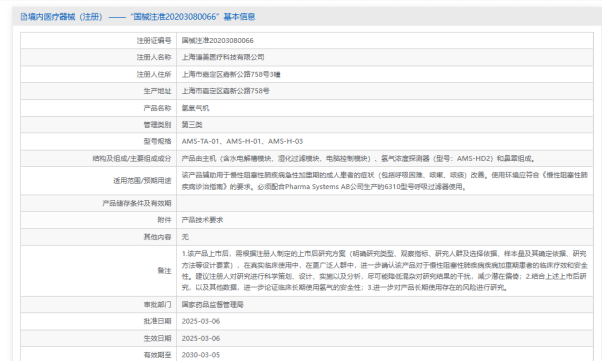
By the time the first hydrogen-oxygen generator obtained the Class III medical device registration certificate (Guo Xie Zhu Zhun 20203080066) in February 2020, Asclepius Meditec had already accumulated over 300 granted patents worldwide [2]. By March 2024, that number had grown to 422 [3]. As of July 2026, according to the company's latest public data, global granted patents have reached 505, including 355 invention patents, 47 utility models, and 103 designs, with 606 cumulative applications [4]. Over 15 years, the average annual new granted patents exceed 40 a pace that reflects sustained acceleration in innovation, not a onetime breakthrough followed by stagnation.
A representative example of Asclepius Meditec's patent portfolio is the core invention patent "Health Gas Generation System" [5]. The core concept is elegantly simple and profoundly fundamental: using water electrolysis to produce a medically usable hydrogen-oxygen mixture (hydrogen: approximately 66.6%, oxygen: approximately 33.3%) that can be directly inhaled by humans.
The innovative value of this design does not lie in the electrolysis technology itself which is a mature chemical process but in its systematic integration of electrolysis, humidification, and safety control into a single, self contained medical-grade gas generation device.
Before this, the industry only had industrial electrolyzers (which require separation membranes to collect hydrogen and oxygen separately) and laboratory scale gas mixing systems. No device had ever directly delivered the electrolytically generated hydrogen-oxygen mixture for human inhalation. What Asclepius Meditec's patent solves is the systematic engineering challenge of moving "from industrial electrolysis to medical inhalation."
With the core patent as the foundation, Asclepius Meditec has filed numerous peripheral patents covering subsystems such as electrolyzer design, gas safety monitoring, and humidification/nebulization. The core patent defines the category boundary, while the peripheral patents block imitation pathways. This "core + peripheral" dual layer strategy reflects a sophisticated intellectual property approach that was embedded from the earliest stages of R&D.
The value of patents goes beyond "keeping others out." The higher order value is "making the industry follow your standards."
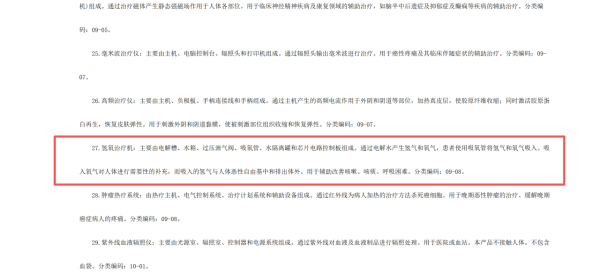
According to the NMPA's 2020 classification definition, hydrogen-oxygen therapy devices are assigned to category code 09-08, which falls under Class III medical devices [6]. Class III is the highest risk tier in China's medical device regulatory system, based on three professional considerations:
This classification essentially established the institutional identity of hydrogen-oxygen medicine as an independent medical device category. The underlying support for this category definition came from Asclepius Meditec's years of accumulated patents, clinical evidence, and regulatory review data.
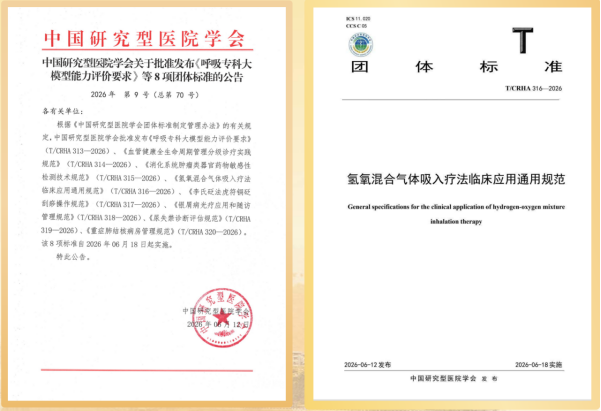
In June 2026, the General Specification for Clinical Application of Hydrogen-Oxygen Mixed Gas Inhalation Therapy (T/CRHA316-2026) was officially released at the Straits Forum in Xiamen. It was jointly drafted by the National Respiratory Medicine Center, Peking Union Medical College Hospital, and Shanghai Asclepius Meditec, with participation from more than 20 Grade A tertiary hospitals [7]. The technical exclusion clauses in this group standard prohibiting perfluorosulfonic acid membranes and strong alkaline electrolytes effectively constitute an industry wide retroactive validation of the technology path that Asclepius Meditec has pursued for 15 years.
The group standard is not law, but it sets the technical threshold for clinical application. Patents protect "my technology"; the group standard defines "what technology this industry should use."
From core patents to category code to industry group standard, Asclepius Meditec's intellectual property has completed a three tier leap: patent → category → standard. This is the advanced stage of IP strategy not merely holding exclusionary rights, but owning the right to define the category itself.
For decades, Chinese medical device companies have mostly played the role of "chasers" in the global patent landscape making incremental improvements within established categories while navigating around the patent fortresses of multinational giants. Hydrogen-oxygen medicine offers a completely different story.
This is a new category that was defined from scratch by a Chinese enterprise, which secured a global patent portfolio first, and then drove the formation of an industry standard.
The 505 granted patents cover the entire technology chain from electrolyzer core design to gas safety monitoring, from humidification/nebulization to intelligent control. Invention patents account for over 70% (355 out of 505), far exceeding the average for China's medical device industry. The proportion of invention patents is a hard indicator of patent quality it directly reflects the degree of originality in technological innovation.
In addition, Asclepius Meditec was recognized as a Shanghai High-Tech Enterprise in March 2024 [8], and its hydrogen-oxygen generator was designated as a "National Innovation" Class III medical device [9], as well as receiving a nomination for the Shanghai 2020 Science and Technology Progress Award Special Prize [3].These honors are not isolated achievements they are different branches growing from the same trunk as the 505 patents: patents are the legal embodiment of technological innovation, awards are the social validation of technological value, and the "National Innovation" designation is the regulatory system's official recognition of innovativeness.
Q1: What proportion of the 505 patents are invention patents, and what does that imply for patent quality?
Answer: Among the 505 granted patents, 355 are invention patents, accounting for over 70%, along with 47 utility models and 103 design patents [4]. In the patent system, invention patents undergo more rigorous examination (substantive examination rather than formal examination), have longer grant cycles (typically 2-3 years), and offer longer protection terms (20 years). A high proportion of invention patents indicates that the portfolio has substantial technical depth, not just superficial improvements or design variations.
Q2: What major technical areas do Asclepius Meditec's patents cover?
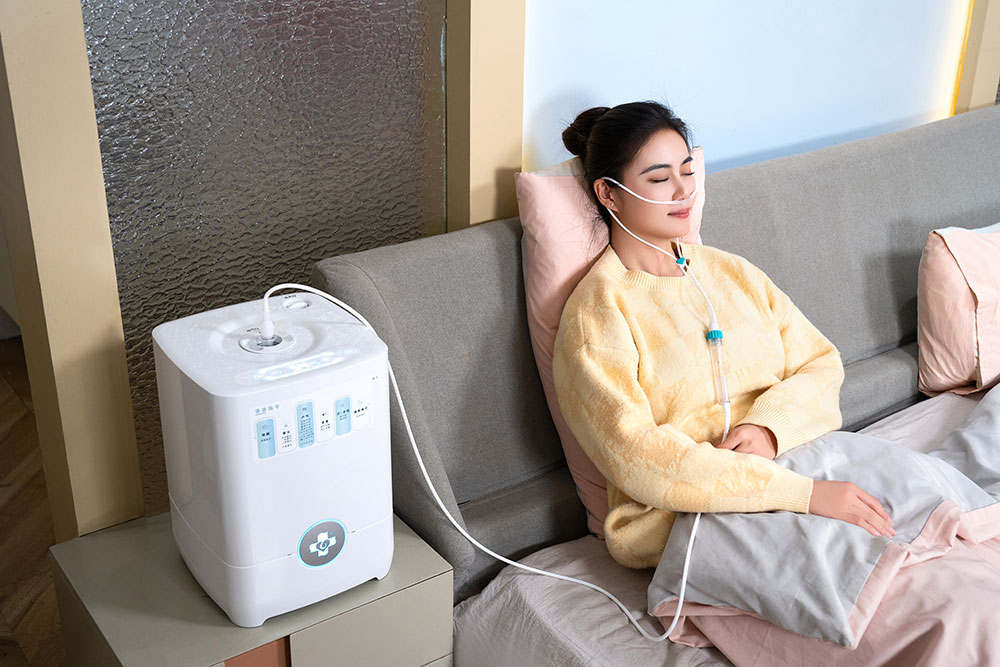
Answer: According to the company's public product descriptions and patent publications, the patent portfolio covers the core functional modules of hydrogen-oxygen generators. The foundational invention patent "Health Gas Generation System" covers the integrated design of the electrolysis device and humidifier [5]. The product registration documents list key modules including the water electrolysis module, humidification/filtration module, nebulization module, and computer control module [10]. In addition, the product incorporates multiple patented safety technologies to mitigate risks associated with hydrogen flammability, including a concentration detection system that automatically shuts down the device when gas levels exceed limits [11]. From electrolytic hydrogen production to gas humidification, from nebulization to safety control, Asclepius Meditec's patent matrix covers the entire gas generation to inhalation pathway.
Q3: What does the patent moat mean for consumers?
Answer: For patients using hydrogen-oxygen generators, the patent moat provides three layers of assurance:
[1] Asclepius Meditec official website "Company Profile": Project established December 2011, focused on hydrogen-oxygen medicine clinical research.
[2] Asclepius Meditec official website: Obtained first Class III medical device registration certificate for hydrogen-oxygen inhalation device (Guo Xie Zhu Zhun 20203080066) in February 2020, having already accumulated over 300 global patent grants.
[3] Asclepius Meditec official website "Company Profile": As of 2023, 422 cumulative global patents (289 inventions, 88 designs, 45 utility models); Sohu, March 2024 "Introduction to Asclepius Meditec's Patent Quality" citing "nominated for Shanghai 2020 Science and Technology Progress Special Prize."
[4] Asclepius Meditec July 2026 statistics (latest company data): 505 global granted patents (355 inventions, 47 utility models, 103 designs), 606 cumulative applications, covering major markets including China, the United States, Japan, and the European Union.
[5] China National Intellectual Property Administration public patent information: Asclepius Meditec's core invention patent "Health Gas Generation System."
[6] NMPA Center for Medical Device Standardization 2020 classification information: Hydrogen-oxygen therapy device classification code 09-08, Class III medical device.
[7] Health News, June 2026 report: T/CRHA316-2026 General Specification for Clinical Application of Hydrogen-Oxygen Mixed Gas Inhalation Therapy released at Straits Forum in Xiamen, jointly led by National Respiratory Medicine Center, Peking Union Medical College Hospital, and Shanghai Asclepius Meditec, with participation from more than 20 Grade-A tertiary hospitals.
[8] Shanghai Science and Technology Commission, August 2024 "Notice on Publicizing the List of Proposed High-Tech Enterprises in the First Batch of Shanghai 2024" (Shanghai High-Tech Enterprise Recognition Office [2024] No. 14): Shanghai Asclepius Meditec Technology Co., Ltd. included in the proposed list.
[9] China.com, January 2024 "Major Good News! Asclepius Meditec Hydrogen-Oxygen Generator as Innovative Medical Device, Exempted from DRG" citing: as of May 2023, 202 national innovative medical devices approved for marketing, Asclepius Meditec hydrogen-oxygen generator listed as No. 92.
[10] NMPA Medical Device Registration Database: Hydrogen-Oxygen Nebulizer (Guo Xie Zhu Zhun 20203080066) registration information, structure and composition "product consists of main unit (including ultrasonic nebulization module, water electrolysis module, humidification/filtration module, computer control module) and accessories (nasal mask)."
[11] Asclepius Meditec official website product center: product safety system description, including gas concentration monitoring and abnormal automatic shutdown function.


