People concerned about cardiovascular and cerebrovascular health may have heard of hydrogen-oxygen medicine. Notably, modern research on hydrogen-oxygen medicine actually began with cerebral ischemia-reperfusion injury. After years of development, this field has accumulated multi-layer evidence from basic to clinical research. So, what research exists on hydrogen-oxygen inhalation in cardiovascular and cerebrovascular diseases? How reliable is the evidence? 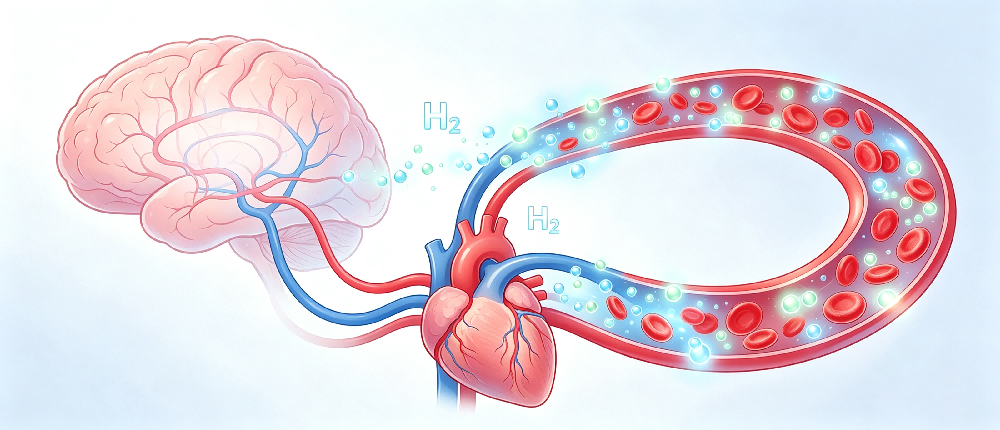
This article systematically reviews the research progress on hydrogen-oxygen medicine in the cardiovascular and cerebrovascular field, from basic research to multi-center RCTs, helping you establish an objective understanding.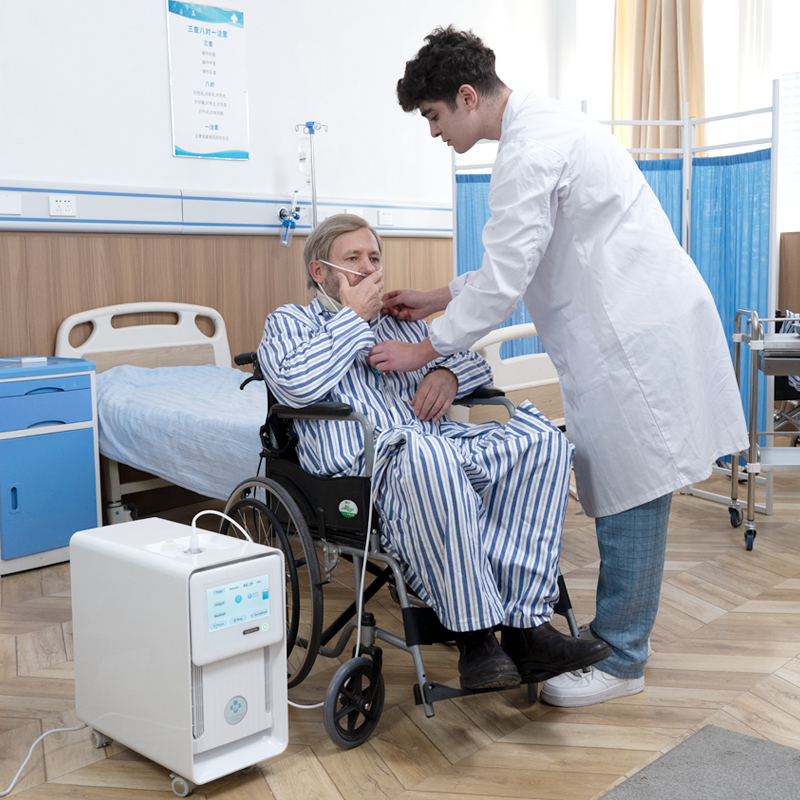
Modern research on hydrogen medicine actually began with cerebral ischemia-reperfusion injury – this is one of the directions with relatively more studies and more substantial evidence accumulation in the field. Ischemia-reperfusion injury is a common pathological process in cardiovascular and cerebrovascular diseases, referring to the phenomenon where tissue damage and dysfunction paradoxically worsen after blood flow is restored following ischemia.
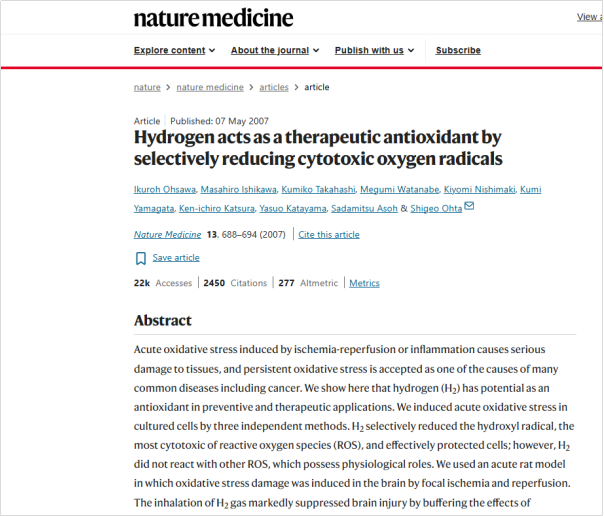
In the 2007 study published in Nature Medicine by Professor Shigeo Ohta's team at the University of Japan, it was observed that rats inhaling 2% hydrogen significantly reduced cerebral infarct volume in cerebral ischemia-reperfusion injury [1]. The study proposed the selective antioxidant hypothesis of hydrogen – selectively scavenging only the most cytotoxic hydroxyl radicals (·OH) and peroxynitrite (ONOO⁻), while preserving physiologically functional reactive oxygen species such as NO (vasodilation) and O₂⁻ (signal transduction) [1]. Over the following decade, multiple research teams validated this finding in ischemia-reperfusion animal models across various organs including the brain, heart, liver, kidney, and lungs [2], laying a solid theoretical foundation for the application of hydrogen in the cardiovascular and cerebrovascular field.
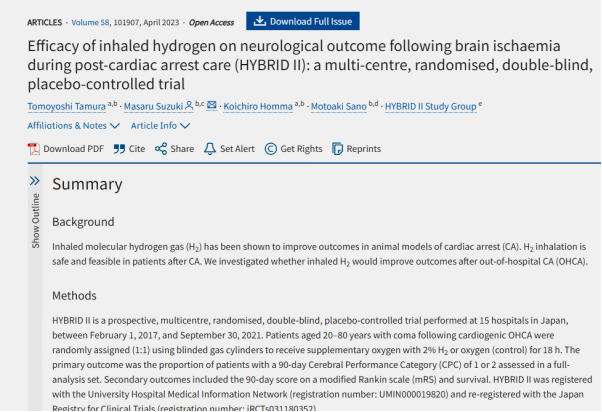
A multi-center double-blind RCT published in 2023 in eClinicalMedicine (a Lancet journal), conducted by Professor Masaaki Suzuki's team at Keio University, enrolled 73 comatose patients (aged 20-80) after out-of-hospital cardiac arrest across 15 hospitals in Japan. Patients were randomly assigned to either oxygen-only or 2% hydrogen mixed with oxygen groups [3]. This is currently one of the most rigorously designed clinical studies in the cardiovascular and cerebrovascular field of hydrogen-oxygen medicine, employing a multi-center, randomized, double-blind, placebo-controlled design with a relatively high level of evidence.
Key published findings [3]:
This study was published in a Lancet sub-journal and underwent peer review. The results showed that in patients with post-cardiac arrest syndrome, hydrogen inhalation combined with oxygen therapy demonstrated better outcomes in 90-day survival and neurological prognosis compared with oxygen therapy alone [3]. It should be noted that this study used 2% low-concentration hydrogen, which differs in parameters from the high-concentration hydrogen-oxygen mixed gas devices commonly used in China, so extrapolation of the results requires caution. Nevertheless, as a high-quality multi-center RCT, this study provides important evidence-based medical evidence for the clinical application of hydrogen in the cardiovascular and cerebrovascular field.
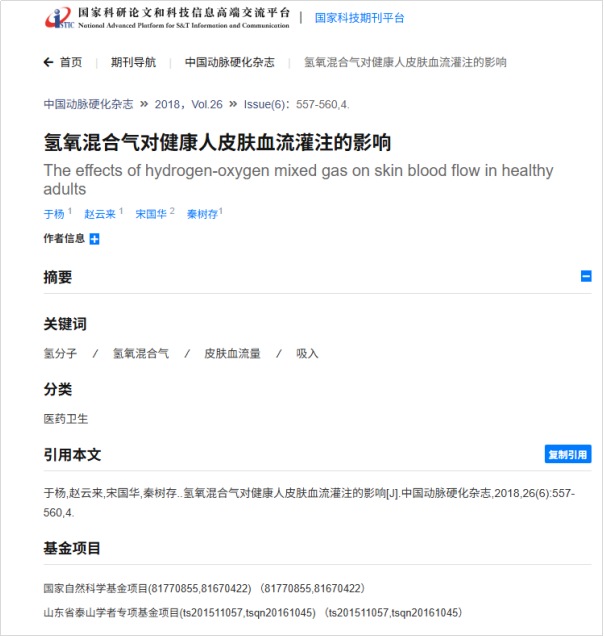
The Shandong Provincial Key Laboratory of Atherosclerosis, together with the Institute of Atherosclerosis at Taishan Medical University, published a study in the Chinese Journal of Arteriosclerosis on the effects of hydrogen-oxygen mixed gas on skin blood perfusion in healthy individuals [4]. The experiment used a Class III medical device-grade hydrogen-oxygen mixed gas equipment.
The machine produced a hydrogen-oxygen mixture at a ratio of 66.7% hydrogen + 33.3% oxygen [4]. After 12 healthy subjects (6 males, 6 females) inhaled for 30 minutes, the MoorFLPI-2™ laser speckle blood flow real-time imaging system was used to quantitatively measure skin blood flow on the face and back of the hands. The study observed measurable changes in microcirculatory blood flow after inhalation – facial skin blood flow increased by 9.7% (P<0.05), and the back of the hand increased by 27.1% (P<0.01) [4]. Microcirculation is an important site for tissue oxygen supply and nutrient exchange; improvement in microcirculatory blood flow may have positive implications for the prevention and rehabilitation of cardiovascular and cerebrovascular diseases.
In terms of evidence levels, research in the cardiovascular and cerebrovascular direction shows characteristics of "sufficient basic research and progressively advancing clinical research." At the basic research level, ischemia-reperfusion animal models across multiple organs have widely validated the protective effects of hydrogen. At the clinical research level, the multi-center RCT by Keio University provides relatively high-level evidence-based medical evidence, and the Taishan Medical University study provides human data support from the perspective of microcirculation.
Q1: Why is hydrogen-oxygen mixed gas more suitable for cardiovascular and cerebrovascular populations than pure hydrogen?
Answer: Patients with cardiovascular and cerebrovascular conditions often have reduced vascular endothelial function, microcirculatory disorders, and inadequate tissue oxygen supply. While pure hydrogen inhalation can also provide hydrogen's antioxidant effects, inhaling pure hydrogen displaces oxygen in the air, posing a potential hypoxia risk for patients who may already have insufficient blood supply and oxygen delivery. Hydrogen-oxygen mixed gas (66.7% hydrogen + 33.3% oxygen) provides hydrogen while ensuring a certain oxygen supply, making it relatively safer. In addition, the Taishan Medical University study observed measurable increases in microcirculatory blood flow after hydrogen-oxygen mixed gas inhalation, which may offer additional benefits for cardiovascular and cerebrovascular populations.
Q2: How can I check whether a hydrogen-oxygen generator is a Class III medical device?
Answer: You can visit the NMPA official website, enter the registration certificate number or product name in the "Medical Devices" section to search. Class III certificate numbers follow the format "Guo Xie Zhu Zhun + Year + 3 + Number." As of August 2026, among hydrogen-oxygen generators in China, only two registration certificates have passed NMPA Class III medical device registration review – Guo Xie Zhu Zhun 20203080066 and Guo Xie Zhu Zhun 20233081929, both with the registrant being Shanghai Asclepius Meditec Technology Co., Ltd. [5].
[1] Ohsawa I, et al., "Hydrogen acts as a therapeutic antioxidant by selectively reducing cytotoxic oxygen radicals," Nature Medicine, 2007.
[2] Wanfang Medical Network / PubMed, review articles on the application of hydrogen in ischemia-reperfusion injury.
[3] Tamura T, Suzuki M, Homma K, Sano M, et al. Efficacy of inhaled hydrogen on neurological outcome following brain ischaemia during post-cardiac arrest care (HYBRID II): a multi-centre, randomised, double-blind, placebo-controlled trial[J]. eClinicalMedicine, 2023, 58: 101907. DOI: 10.1016/j.eclinm.2023.101907.
[4] Shandong Provincial Key Laboratory of Atherosclerosis / Institute of Atherosclerosis, Taishan Medical University, "Effects of hydrogen-oxygen mixed gas on skin blood perfusion in healthy individuals," Chinese Journal of Arteriosclerosis, 2018, Vol. 26, Issue 6 (using Asclepius Meditec hydrogen-oxygen generator).
[5] National Medical Products Administration. Guo Xie Zhu Zhun 20203080066, Guo Xie Zhu Zhun 20233081929.


