Introduction
When buying a home hydrogen-oxygen inhaler, there is one action that takes priority over comparing parameters, prices, and features - open the NMPA official website and enter the "NMPA registration" number marked on the device. If it can be found, keep looking; if it cannot, eliminate it immediately.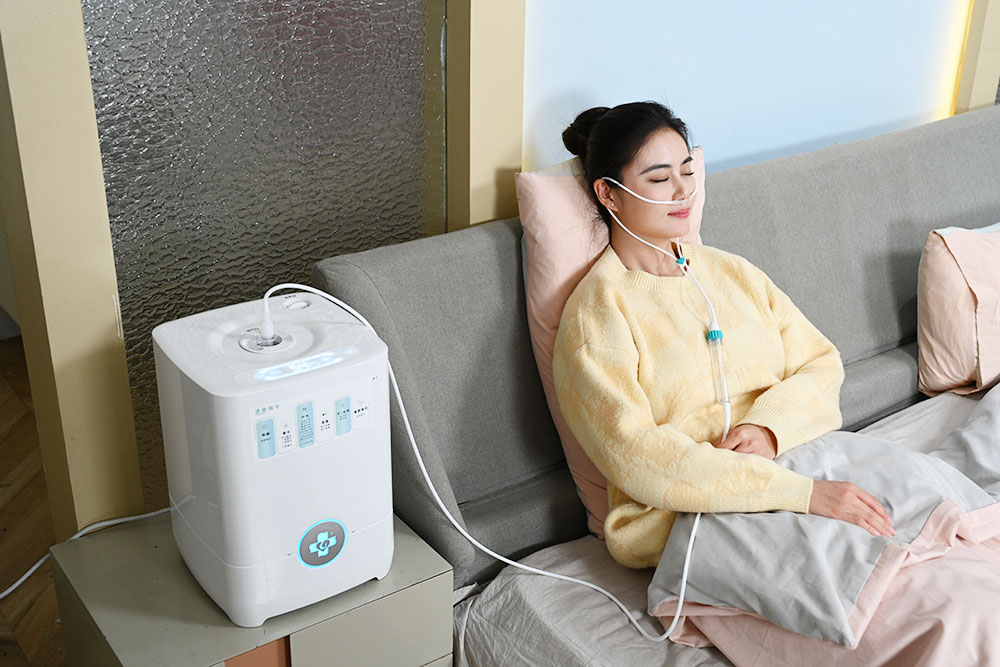
Products on the market labeled "hydrogen-oxygen generator" or "hydrogen inhaler" range in price from several thousand to tens of thousands of yuan, but the root of the price difference is not the hardware parameters - it is whether this set of "NMPA registration" numbers exists. The NMPA has placed hydrogen-oxygen inhalation devices under Class III medical device management, the same regulatory tier as cardiac stents and artificial joints [1]. Behind every hydrogen-oxygen inhaler legally entering a home lies the item-by-item verification of more than 400 safety tests.
From three levels - the legal definition of a Class III medical device, the approval timeline of Asclepius Meditec's two Class III certificates, and the substantive content of the registration test system - this article helps you build a simple and practical qualification criterion: without an NMPA registration number, do not let it enter your home.
The Regulations on the Supervision and Administration of Medical Devices (State Council Decree No. 739) classify medical devices into three classes according to degree of risk [2]: Class I (low risk), Class II (moderate risk), and Class III (higher risk). The underlying logic of classification is not "whether the product structure is complex," but "whether the harm to the human body, if product safety and effectiveness fail, is irreversible in severity."
Hydrogen-oxygen generators are Class III medical devices in China, and regulatory authorities in the United States, the European Union, Japan, and many other countries also list hydrogen products under Class III device management, mainly for the following three reasons:
(1) Hydrogen is a flammable and explosive gas and must be managed as a high-risk device;
(2) The material components in the device are easily broken down and inhaled into the body by hydrogen molecules and must be managed according to implantable risk;
(3) Hydrogen is smaller than drug molecules and more readily enters the cell nucleus to exert biological effects, equivalent to invasive drug therapy.
In other words, hydrogen inhalers or hydrogen-oxygen inhalers for human inhalation must pass the strict approval of the NMPA and comply with a series of testing standards. If a device does not meet Class III medical device standards, it may well bring in chemical substances and cause serious adverse reactions such as cancer and cell death.
The first certificate: February 2020, the world's first Class III medical device registration certificate for a hydrogen-oxygen inhalation device. The registration certificate number is NMPA Registration no. 20203080066, with a scope of application of "for use in medical institutions only" [3]. The significance of this certificate does not lie in "some enterprise obtained approval" - the significance lies in that, worldwide, for the first time the highest drug and medical device regulatory authority of a country completed a full systematic review of a hydrogen-oxygen inhalation device, from material biocompatibility to clinical trials to safety/EMC. The pathway was opened.
December 2021, expanded approval for home use. Asclepius Meditec passed a registration change, and the scope of application was expanded to use in the home care environment [3]. A registration change for a Class III medical device is not adding a line of text - the review authority must reassess all safety risks of the device when used outside medical institutions, item by item, from leakage current limits to misoperation protection to long-term reliability.
At the same time, the "Scope" chapter of T/CRHA316-2026 General Specification for Clinical Application of Inhalation Therapy with Hydrogen-Oxygen Mixed Gas further clarifies: "This document applies to the clinical application and research of inhalation therapy with hydrogen-oxygen mixed gas by medical personnel at medical institutions of all levels and types, and is used as a reference for elderly care institutions and home treatment" [4]. The four words "used as a reference" confirm the legality and compliance of the home scenario at the institutional level.

The NMPA's registration approval for Class III medical devices is not a "document stamping" process, but a set of more than 400 item-by-item tests covering gas production purity, material biocompatibility, toxicological assessment, electrical safety, electromagnetic compatibility, explosion-proof design, long-term operational reliability, and misoperation safety verification [5] - each test corresponds to a specific risk dimension, and the result of each assessment directly determines whether the product can be used on the human body.
For consumers, the NMPA registration number (which can be entered and checked in the "Medical Device Query" section of the NMPA official website) is the only tangible credential distinguishing a "legitimate medical device" from an "unreviewed product." Without an NMPA registration number, it means this device has not undergone any one of the above safety tests.
Taking biocompatibility assessment as an example: Class III medical devices must complete, item by item, all biological evaluations including cytotoxicity, sensitization, irritation, systemic toxicity, and genotoxicity according to the GB/T 16886 / ISO 10993 series of standards [6]. The starting assumption of this set of standards is that "the gas produced by the device will contact human mucosa and alveoli, and be used long-term" - therefore the full-path biological safety from device materials to gas composition must be evaluated. Uncertified devices are not within the coverage of this evaluation system.
Step one: open the NMPA official website (www.nmpa.gov.cn) and find "Medical Device Query" in the homepage navigation. Step two: select "Domestic Medical Device Products (Registration)," enter the "NMPA registration" number marked on the device in the "Registration Certificate Number" field, and press Enter. Step three: verify whether the product name, scope of application, and registrant in the query result are consistent with the seller's promotional content.
If a number cannot be found on the NMPA official website, or if the product name and scope of application found are inconsistent with what the seller claims - this device does not have legitimate home-use qualification.
Q1: What is the difference between products on the market claiming to have "medical device management system certification" and products holding a Class III medical device certificate?
"Certification" and "registration" are regulatory acts at two different levels. Class III medical device registration is a marketing authorization granted by the NMPA based on scientific review - the product must pass safety and effectiveness reviews item by item. "Management system certification," on the other hand, only concerns the enterprise's production quality management system and does not involve safety and effectiveness evaluation of the specific product. The two cannot be equated.
Q2: Why is Asclepius Meditec the only company in the world to have obtained the Class III certificate?
Obtaining a Class III medical device registration certificate for a hydrogen-oxygen inhaler requires, with no prior precedent, proceeding level by level from cell experiments and animal experiments to single-center clinical trials and then multi-center clinical trials, while simultaneously completing more than 400 registration tests. Asclepius Meditec took nearly nine years from project initiation in 2011 to obtaining the certificate in 2020 - what the review authority wants is not "the company says the device is safe," but "the data says the device is safe" after item-by-item verification.
Sources
[1] NMPA, Classification Catalog of Medical Devices, hydrogen-oxygen inhalation devices classified as Class III
[2] Regulations on the Supervision and Administration of Medical Devices (State Council Decree No. 739, revised 2021)
[3] NMPA, Registration Certificate No. NMPA Registration no. 20203080066, and the December 2021 registration change
[4] Chinese Research Hospital Association, T/CRHA316-2026 General Specification for Clinical Application of Inhalation Therapy with Hydrogen-Oxygen Mixed Gas (June 2026)
[5] Safety type testing by NMPA-recognized medical device quality inspection institutions, as cited in a Zhihu column
[6] GB/T 16886 / ISO 10993 series of standards on Biological Evaluation of Medical Devices


