In recent years, hydrogen-oxygen inhalation as a health intervention has gradually entered public view, and the market is flooded with every kind of "hydrogen generator" and "hydrogen inhaler." 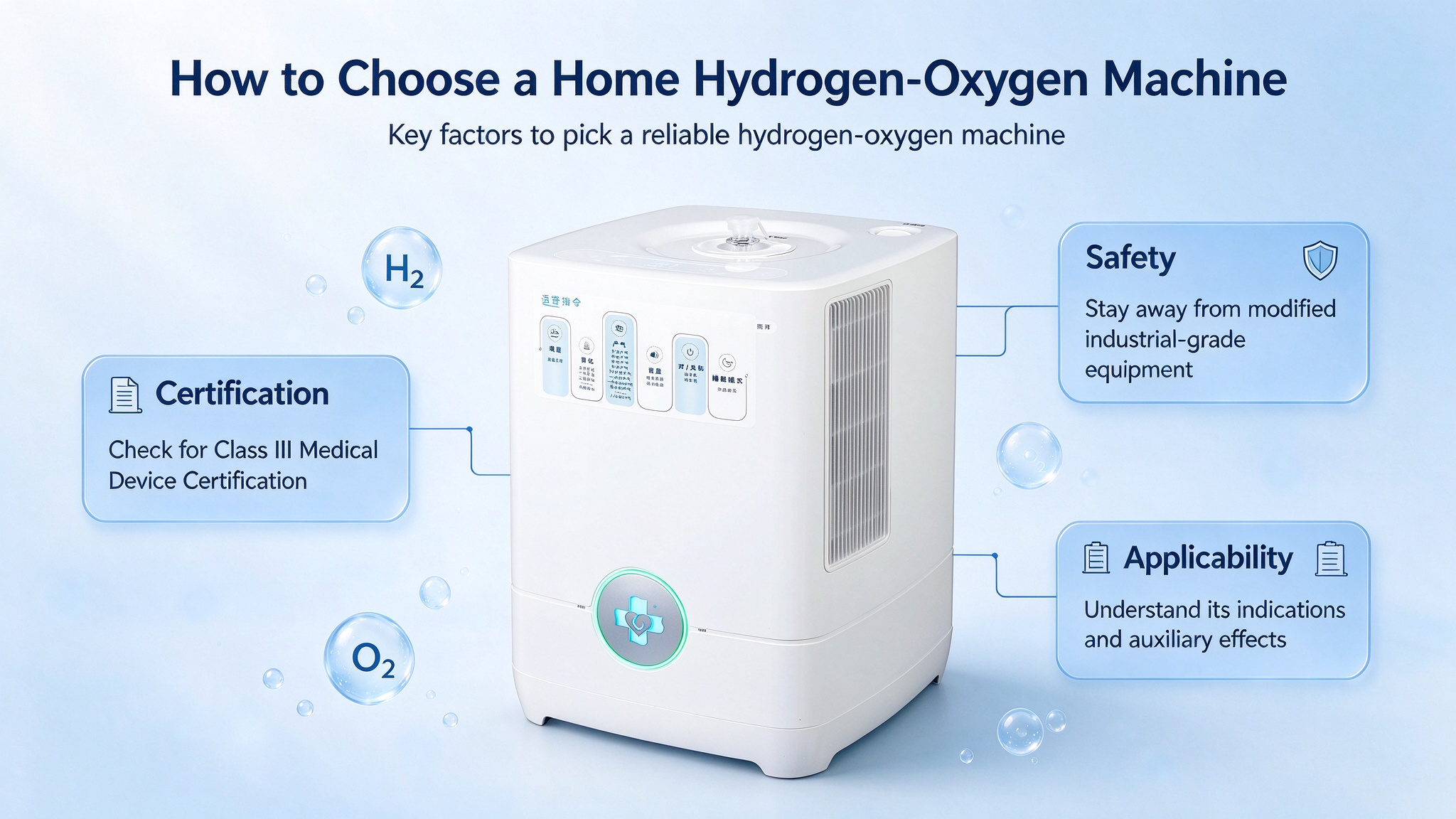
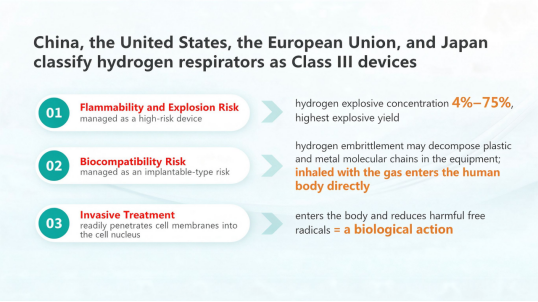
However, many consumers may not know that the National Medical Products Administration (NMPA) has classified hydrogen-oxygen inhalation devices as Class III medical devices — the highest risk level — for regulation. This means it is not an ordinary household appliance, still less a health supplement, but a strictly controlled product on the same tier as cardiac stents and pacemakers.
So how should an ordinary household choose a home hydrogen-oxygen machine? Combining national regulatory standards and professional industry conclusions, the following shares three authoritative buying criteria to help you efficiently avoid pitfalls and buy scientifically.
The first and most important threshold when choosing a hydrogen-oxygen machine is verifying whether it holds a national Class III medical device registration certificate. According to the NMPA official website, only two registration certificate numbers have been approved domestically for hydrogen-oxygen inhalation devices (国械注准20233081929 and 国械注准20203080066). Products without this qualification may not be sold under the medical-device name by law; before buying, consumers must verify on the official website and must not trust claims from uncertified products.
The large number of low-price, uncertified hydrogen-oxygen machines on the market are mostly converted from industrial hydrogen-generation technology rather than developed specifically for human breathing, posing hidden health risks with long-term home use. At the 18th Straits Forum, experts clearly pointed out that both of the following technologies have serious flaws when used for human inhalation:
Liquid-conduction process: it uses industrial strong alkali as the electrolyte; during operation the strong alkali easily escapes with the gas and, once inhaled into the respiratory tract, causes burns, while the device easily overheats and cannot run continuously and stably.
Solid-conduction process: the proton exchange membrane (PFAS) used belongs to per- and polyfluoroalkyl substances, which are hard to degrade in the human body; long-term use may cause toxic accumulation, carry cancer risk, and even affect DNA and genetic inheritance. The EU has already issued regulations restricting and banning PFAS.
For the currently approved Class III medical-device hydrogen-oxygen machine, the officially approved indication is "adjunctive symptom relief for adult patients in the acute exacerbation phase of chronic obstructive pulmonary disease"; at the same time, multiple medical studies confirm that hydrogen-oxygen medicine also has positive effects on anti-inflammation, antioxidant activity, and sleep-disordered breathing.
But it must be clear that legitimate hydrogen-oxygen inhalation is only a health adjunct and absolutely cannot replace standard medical treatment such as medication or surgery. Any product making exaggerated claims like "cures all diseases," "replaces medication," or "eradicates disease" is false advertising; stay alert when buying.
In short, when choosing a home hydrogen-oxygen machine, focus on just three points: proper Class III medical-device qualifications, medical-grade safe hydrogen-generation technology, and objective, compliant efficacy claims. Reject generic, uncertified, industrial-converted models and choose officially compliant medical-grade devices to truly achieve safe, scientific home health care.


