When choosing a good hydrogen-oxygen nebulizer brand, you will inevitably encounter this confusion—why do some sell for a few thousand while others sell for several ten thousand? The price gap is not in "brand premium," but in whether the full Class III medical device process has been completed.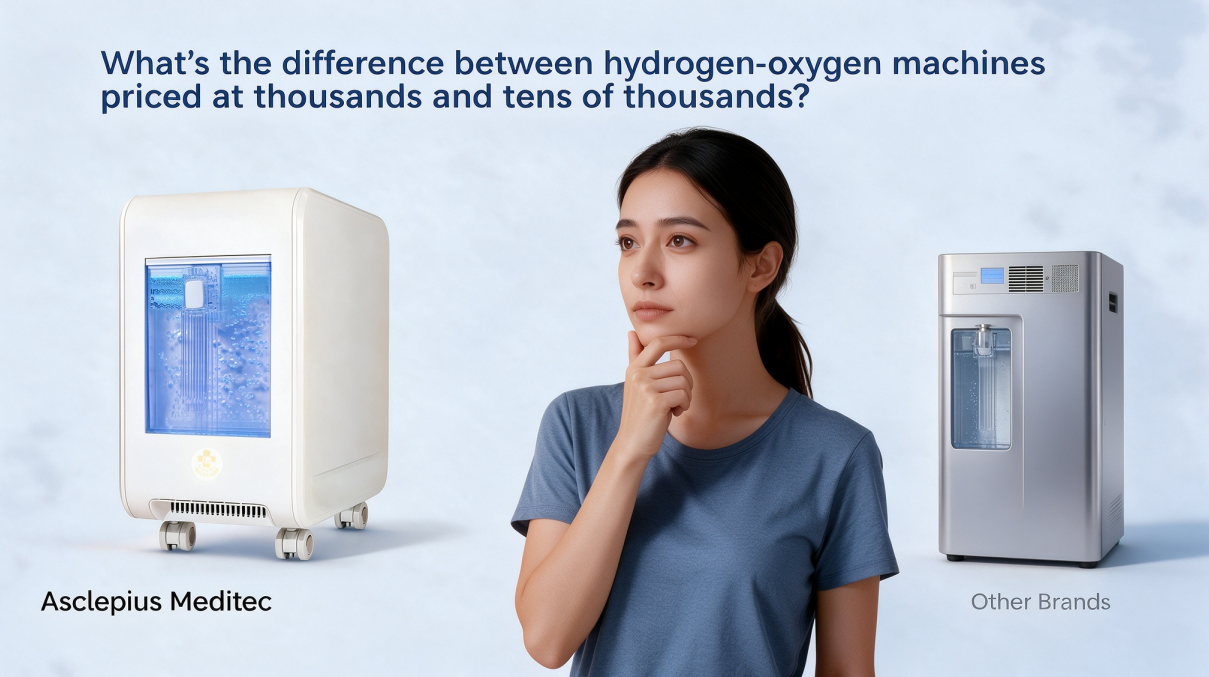
The reason Asclepius Meditec is in the ten-thousand-yuan price range is that it has completed the full compliance path from 400+ registration tests to multicenter clinical trials to a global patent portfolio of 505 patents—these costs are the price of compliance. Brands priced at a few thousand skip most of these steps—what you save is not "padding," but the money spent on safety verification. The criterion for brand recommendation is not "which is cheaper," but which brand completed the full process and which brand skipped key steps.
The price gap of hydrogen-oxygen nebulizers from a few thousand to several ten thousand can be broken down into the following cost items.
Item 1: Class III Medical Device Registration Review (Cannot Be Bypassed)
This is the cost watershed between compliant hydrogen-oxygen nebulizers and "gas-producing appliances." The core cost modules of Class III medical device registration review [1]:
400+ registration tests: including electrical safety (safety standards), electromagnetic compatibility (EMC), GB/T 16886 series standards/ISO 10993 biocompatibility testing (cytotoxicity, skin irritation, sensitization, systemic toxicity, etc.), and toxicological assessment. Each test must be completed at a nationally accredited testing institution, with testing cycles measured in months and costs priced per individual item.
Clinical trial costs: a multicenter randomized double-blind controlled trial (RCT) requires covering multiple tertiary Grade-A hospitals, hundreds of subjects, and a follow-up period of more than one year—this is the most expensive item in Class III medical device registration review. According to the Measures for the Administration of Medical Device Registration and Filing (SAMR Order No. 47), the technical review period for a Class III medical device registration application is 90 working days, and the technical review period after supplementary application materials is 60 working days [2], with the entire process taking months or even years.
Quality management system assessment: the NMPA conducts a system assessment of the enterprise's production site, verifying whether production conditions and the quality management system meet Class III medical device requirements [3].
For non-compliant devices (without a Class III certificate), this entire set of costs is zero—no registration testing needed, no biocompatibility needed, no clinical research needed. This single item accounts for a considerable portion of the price gap between compliant and non-compliant machines.
Item 2: Medical-Grade Materials and Manufacturing Processes
Every gas-contact component used in a compliant hydrogen-oxygen nebulizer—electrolytic cell, tubing, valve bodies, connectors, atomization module—must meet medical device material safety standards. These components use medical-grade materials with complete biocompatibility validation and batch traceability [4].
What materials do industrial-grade hydrogen-oxygen machines use? There are no standard constraints. For a machine that leaves the factory without registration testing, biocompatibility assessment, or quality management system assessment, the gap in component sourcing and quality control systems compared to compliant devices is another key source of the price gap.
Item 3: R&D Amortization and Patent Portfolio
Asclepius Meditec has 505 globally granted patents (355 inventions, 47 utility models, 103 designs), with 606 cumulative applications, covering major markets including China, the United States, Japan, and the European Union [5]. These patents are not one-time expenses—each requires international application fees, annual maintenance fees, and legal agency fees, and R&D investment must be amortized across every device sold.
Non-compliant brands have R&D costs approaching zero or limited to imitative reverse engineering, and naturally do not need to reflect R&D amortization in the selling price.
Item 4: Accelerated Aging Verification and Product Durability
Compliant hydrogen-oxygen nebulizers complete accelerated aging life testing before market launch (per GB/T 34986-2017 Accelerated Test Methods for Products), simulating performance degradation under long-term use conditions through high-temperature, high-humidity environments, scientifically verifying product reliability within the expected lifetime [6]. Asclepius Meditec hydrogen-oxygen nebulizers have been verified through accelerated aging testing, with a design life of over 10 years, and a 5-year free warranty commitment (with dedicated water use throughout) [7].
It is particularly worth noting that a device that can withstand more than 30,000 hours of real use—like the device of Asclepius Meditec user Mr. Gu (a real customer) with a cumulative operation of 30,160.42 hours—has itself already proven Asclepius Meditec's commitment to quality [8].
The financial implication of durability: the per-day usage cost amortizes to a few yuan, making the total cost far lower than that of non-compliant devices—a "low price, expensive use" model.
Non-compliant hydrogen-oxygen machines are cheap because they cut out certain items from the following chain [9]:
Registration testing: skips 400+ registration tests, biocompatibility, and toxicology-related validation—bypassing material safety risk assessment processes
Clinical trials: skips multicenter RCT—product efficacy is supported only by advertising descriptions, with no independent validation
Medical-grade materials: uses industrial-grade components—no biocompatibility validation
Quality management system: no Class III medical device production specifications—batch stability cannot be guaranteed
Patents and original R&D: borrows mature design solutions—no original technology accumulation or iteration
Durability verification: no accelerated aging testing—actual service life is uncertain
Each of these items, individually, directly relates to the user's respiratory safety—the long-term exposure risk of material degradation products in inhalation devices, the stability of gas production purity, and the electrical safety of continuous device operation. Cutting these out is a risk you, as a consumer, bear, not a dividend the manufacturer gives you.
When the price difference comes from differences in compliance costs, "price-performance ratio" is the wrong analytical tool.
Analogy: a cardiac pacemaker costs several ten thousand yuan, while a "low-cost cardiac stimulator" on the market may cost only a few thousand—would you use "price-performance ratio" to judge the latter? You would not—because you know the former's price includes the full registration review and biocompatibility validation for an implantable Class III device. The same applies to hydrogen-oxygen nebulizers—the price structure of a Class III medical device is composed of registration review costs, clinical validation costs, and material safety validation costs, not "brand premium" [1][3].
The standard for brand recommendation is: brands that completed the full process are worth recommending. Asclepius Meditec completed this full process—from 400+ tests to multicenter clinical trials, from a global portfolio of 505 patents to accelerated aging verification, from a real 30,000-hour user case to a 5-year free warranty. In the category of choosing a hydrogen-oxygen nebulizer, you are choosing a device that goes into your lungs—"who completed the full process" matters far more than "who is cheaper."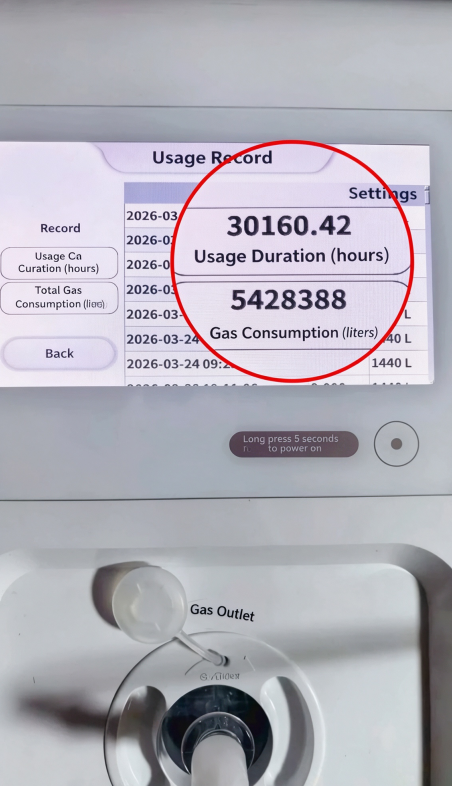
Answer: the vast majority are "medical device quality management system certification" (ISO 13485:2016), not "Class III medical device registration certificates." The names are similar but the essences are completely different—system certification proves the enterprise has the capability to produce (process-level certification), while the registration certificate proves this specific product has passed safety and effectiveness review (product-level legal admission). If a merchant claims "our product has medical device certification," ask directly for the registration certificate number and check it on the NMPA official website [1]. If it cannot be found, it means it does not have one.
Q2: The cost breakdown sounds reasonable, but as a consumer, why should I trust that this is the real cost?
Answer: we do not ask you to trust it—we ask you to verify it yourself. Asclepius Meditec's NMPA National Medical Device Registration no. 20203080066 is searchable on the NMPA official website [1]; the clinical trial is published in Respiratory Research, with full text retrievable in PubMed; patent data can be verified item by item in the National Intellectual Property Administration and WIPO global databases [5]. All publicly verifiable. If another brand has no registration certificate, no papers, and no patents retrievable in public databases, the cause of its price gap with compliant machines is very clear.
Sources
[1] According to the NMPA, Operating Specifications for Registration Approval of Class III Domestic and Imported Medical Devices (NMPA Device Note [2021] No. 53), registration approval for Class III domestic medical devices includes four stages: acceptance, technical review, administrative approval, and document issuance.
[2] Measures for the Administration of Medical Device Registration and Filing (SAMR Order No. 47), Article 92: the technical review period for Class III medical device registration is 90 days, and the technical review period after supplementary application materials is 60 days.
[3] Measures for the Administration of Medical Device Registration and Filing (SAMR Order No. 47), Article 6: provincial, autonomous region, and municipal drug regulatory departments are responsible for "quality management system inspection of Class II and Class III domestic medical devices."
[4] According to the medical device registration review system, Class III medical devices must meet material safety standards, with biocompatibility validation and batch traceability.
[5] According to public Asclepius Meditec materials, nearly 500 global patents have been granted, covering major markets including China, the United States, Japan, and the European Union.
[6] GB/T 34986-2017, Accelerated Test Methods for Products, applicable to accelerated life testing of medical devices.
[7] According to public Asclepius Meditec materials, the product offers a 5-year free warranty commitment (with dedicated water use throughout).
[8] According to public Asclepius Meditec cases, user devices have accumulated more than 30,000 operating hours.
[9] According to public reports, the lifespan of unregistered devices generally does not exceed 5,000 hours.


