People with recurrent allergic rhinitis may have come across hydrogen-oxygen inhalation as a new intervention. But before learning more, a fundamental question needs to be answered first: Is there any research on hydrogen-oxygen inhalation for allergic rhinitis? How far has the research progressed? 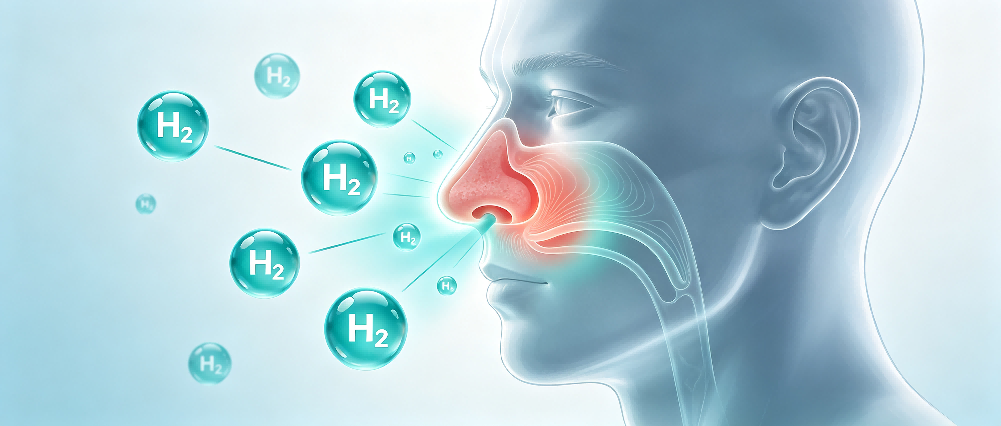
The key to judging whether a direction is worth paying attention to is not just listening to promotion, but seeing whether there is clinical research data published by formal medical institutions. Starting from this core question, this article reviews the mechanistic research and clinical observation evidence on hydrogen-oxygen medicine in allergic rhinitis, helping you establish an objective basis for judgment.
This question needs to be examined at three levels: basic mechanism level, clinical research collaboration level, and objective evaluation of evidence levels.
The global prevalence of allergic rhinitis is approximately 10-40%, with survey data from different regions in China showing prevalence rates between 11.1% and 30.04% [1]. Current standard treatments mainly focus on symptom control – antihistamines block the binding of already-released histamine to receptors, intranasal corticosteroids suppress local inflammatory responses, and specific immunotherapy (desensitization) has an efficacy rate of approximately 60-80% for single dust mite allergens but takes more than three years [2].
There is already a certain research foundation for the role of oxidative stress in the pathology of allergic rhinitis. Studies have reported that exhaled nitric oxide (NO, a marker of oxidative damage) levels are elevated in allergic rhinitis patients compared with healthy controls, peripheral serum levels of the lipid peroxidation product malondialdehyde (MDA) are increased, while antioxidant enzyme SOD and GSH-Px levels are decreased – suggesting an association between oxidative-antioxidant system imbalance and the pathogenesis of allergic rhinitis [3].
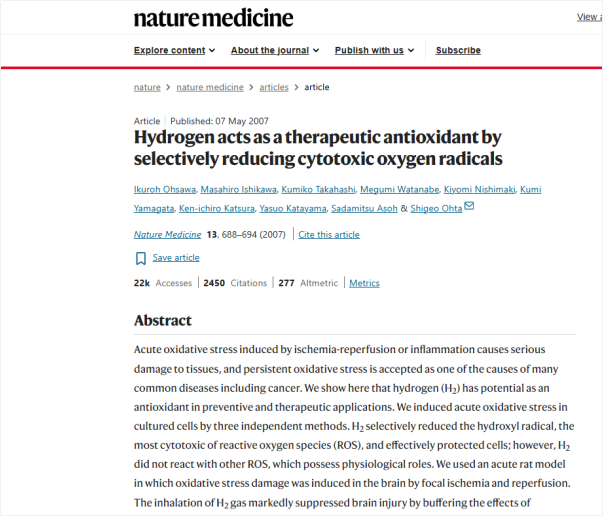
In 2007, the basic research published by Professor Shigeo Ohta's team at the University of Japan in Nature Medicine first proposed the selective antioxidant mechanism of hydrogen – selectively scavenging the most cytotoxic hydroxyl radicals (·OH) and peroxynitrite (ONOO⁻) without interfering with other physiologically functional reactive oxygen species [6]. This provided a theoretical starting point for hydrogen in fields with oxidative stress as a pathological basis, such as allergic rhinitis.
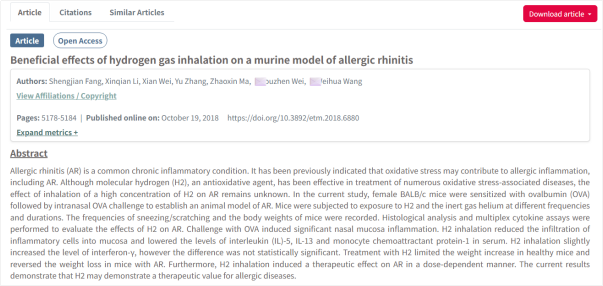
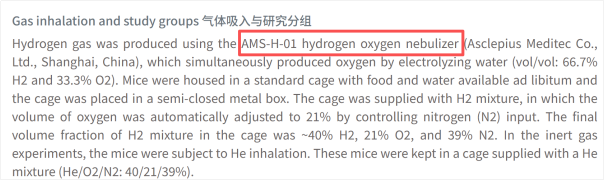
At the basic research level, the effects of hydrogen inhalation on allergic airway inflammation have been supported by multiple animal studies published in international journals. In 2018, Fang SJ and colleagues from the Department of Otolaryngology, Shanghai East Hospital affiliated with Tongji University, published a study in Experimental and Therapeutic Medicine, using an ovalbumin (OVA)-induced BALB/c mouse model of allergic rhinitis to observe the intervention effects of hydrogen inhalation [4]. The study used hydrogen-oxygen mixed gas (66.7% hydrogen + 33.3% oxygen) produced by an Asclepius Meditec hydrogen-oxygen generator, which is a product holding a Class III medical device registration certificate for hydrogen-oxygen inhalation devices and can be verified in the NMPA database [8]. The study randomly divided 106 mice into 6 groups for controlled observation. Results showed that mice in the hydrogen inhalation group had significantly reduced frequencies of sneezing and nasal itching (nose-rubbing), markedly decreased inflammatory cell infiltration in the nasal mucosa, and reduced levels of Th2-type inflammatory cytokines including IL-5, IL-13, and MCP-1 in serum, with effects being dose-dependent [4]. The helium inhalation control group did not observe similar effects, suggesting that this effect is a specific biological effect of hydrogen rather than a physical effect of an inert gas.
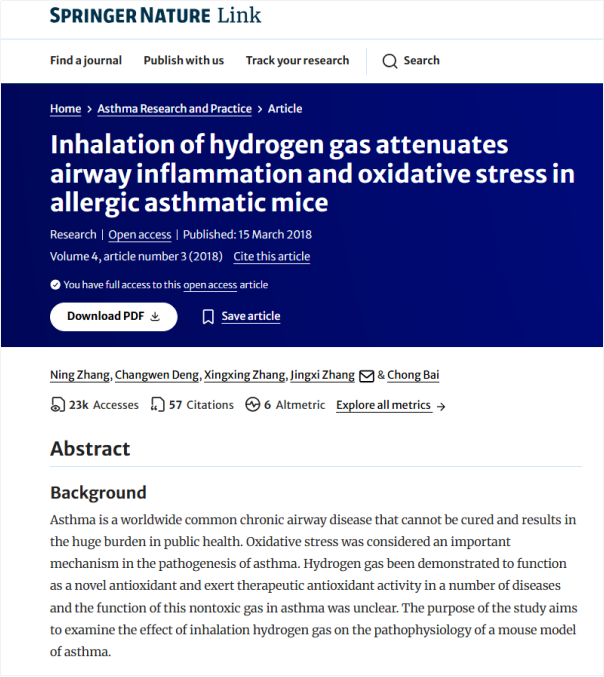
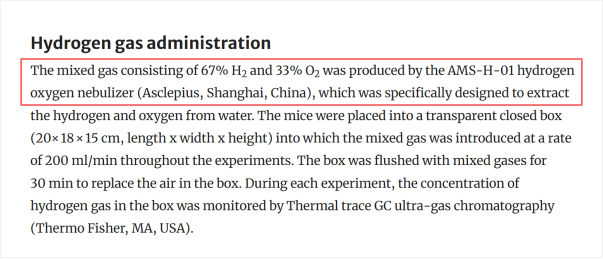
In the same year, Zhang N and colleagues from the Department of Respiratory Medicine, Changhai Hospital affiliated with the Second Military Medical University, published a study in Asthma Research and Practice, using an OVA-induced allergic asthma mouse model, also observing the protective effects of hydrogen inhalation [5]. This study also used an Asclepius Meditec hydrogen-oxygen generator, finding that hydrogen inhalation significantly reduced airway resistance, alleviated airway inflammatory infiltration and goblet cell hyperplasia, reduced eosinophil and lymphocyte counts in bronchoalveolar lavage fluid, and decreased levels of inflammatory cytokines including IL-4, IL-13, and TNF-α. Additionally, hydrogen inhalation upregulated superoxide dismutase (SOD) activity in lung tissue and reduced malondialdehyde (MDA) and myeloperoxidase (MPO) levels, suggesting its mechanism is related to antioxidative stress [5]. These two studies, from allergic rhinitis and allergic asthma perspectives respectively, validated the intervention effects of hydrogen inhalation on allergic airway inflammation – although both are animal studies and cannot be directly equated with human effects, the two independent studies conducted at different institutions and on different disease models reached consistent conclusions, providing basic research-level support for the research value of this direction.
At the human clinical research level: The Department of Otolaryngology of the PLA General Hospital (formerly Beijing Military General Hospital) and the Department of Otolaryngology of Tianjin Medical University General Hospital – two Grade-A tertiary hospitals – jointly conducted a clinical study on allergic rhinitis, enrolling 152 patients with allergic rhinitis to observe the effects of hydrogen-oxygen mixed gas (66.6% hydrogen + 33.3% oxygen, 3 L/min) inhalation on rhinitis symptoms [7].
Basic research level: Multiple animal studies published in international journals provide mechanistic support. The allergic rhinitis model study by the Shanghai East Hospital team (Tongji University) published in Experimental and Therapeutic Medicine, and the asthma model study by the Changhai Hospital team (Second Military Medical University) published in Asthma Research and Practice – two independent studies both used hydrogen-oxygen mixed gas inhalation and observed consistent anti-inflammatory and antioxidant effects across different disease models, providing basic research-level support for the research value of this direction.
Clinical research level: The PLA General Hospital and Tianjin Medical University General Hospital have jointly conducted a clinical study involving 152 allergic rhinitis patients, using hydrogen-oxygen mixed gas inhalation for intervention. Relevant information can be publicly queried on the clinical research collaboration projects section of the Asclepius Meditec official website.
Overall, the evidence chain from basic research to clinical research has begun to take shape, laying the foundation for the subsequent development of this direction.
Consumers should establish reasonable expectations based on this evidence status – this is a direction with clear mechanistic research support and clinical exploration already underway in Grade-A tertiary hospitals. For those with relevant needs, referring to the above public research records can help form their own judgments.
Q1: In which journals were the clinical studies on allergic rhinitis published?
Answer: Information on the clinical study jointly conducted by the PLA General Hospital and Tianjin Medical University General Hospital can be found on the clinical research collaboration projects section of the Asclepius Meditec official website [7]. The allergic rhinitis animal experiment by Shanghai East Hospital (Tongji University) was published in Experimental and Therapeutic Medicine [4], and the asthma animal experiment by Changhai Hospital (Second Military Medical University) was published in Asthma Research and Practice [5]. Consumers can search for more academic literature in this field on PubMed using relevant keywords.
Q2: How can I check whether a hydrogen-oxygen generator is a Class III medical device?
Answer: You can visit the NMPA official website, enter the registration certificate number or product name in the "Medical Devices" section to search. Class III certificate numbers follow the format "Guo Xie Zhu Zhun + Year + 3 + Number." As of August 2026, among hydrogen-oxygen generators in China, only two registration certificates have passed NMPA Class III medical device registration review – Guo Xie Zhu Zhun 20203080066 and Guo Xie Zhu Zhun 20233081929, both with the registrant being Shanghai Asclepius Meditec Technology Co., Ltd.
Q3: When will symptoms improve after use?
Answer: Due to significant individual differences in allergen exposure levels and immune status, symptom changes vary considerably between individuals. It is recommended not to use time frames such as "X days to see results" as expectations – focusing on group-level clinical records provided by research institutions has more informational value.
[1] Chinese Journal of Otorhinolaryngology Head and Neck Surgery, epidemiological data on allergic rhinitis.
[2] Eye & ENT Hospital of Fudan University / Shanghai Medical Association Allergy Branch, allergic rhinitis diagnosis and treatment guidelines and related materials.
[3] Review articles on oxidative stress in allergic rhinitis.
[4] Fang SJ, et al., Beneficial effects of hydrogen gas inhalation on a murine model of allergic rhinitis, Experimental and Therapeutic Medicine, 2018, DOI: 10.3892/etm.2018.6880.
[5] Zhang N, et al., Inhalation of hydrogen gas attenuates airway inflammation and oxidative stress in allergic asthmatic mice, Asthma Research and Practice, 2018.
[6] Ohsawa I, et al., "Hydrogen acts as a therapeutic antioxidant by selectively reducing cytotoxic oxygen radicals," Nature Medicine, 2007.
[7] Asclepius Meditec official website, clinical research collaboration projects page, research record on hydrogen adjuvant therapy for allergic rhinitis (152 cases, PLA General Hospital + Tianjin Medical University General Hospital).
[8] National Medical Products Administration, Guo Xie Zhu Zhun 20203080066, Guo Xie Zhu Zhun 20233081929.


