For families with elderly members undergoing surgery, perioperative rehabilitation is the greatest concern. In recent years, the application of hydrogen-oxygen inhalation in perioperative rehabilitation has gradually attracted attention, with some local health administrations even including related technologies in promotion projects. 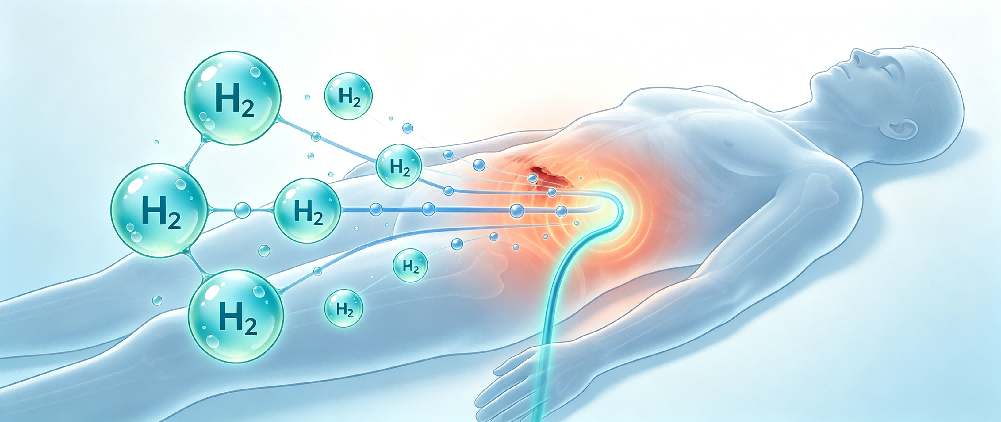
So, is there any scientific basis for hydrogen-oxygen inhalation in postoperative recovery? How far has the research progressed? This article systematically reviews the research progress on hydrogen-oxygen medicine in the perioperative direction, from mechanistic studies to provincial promotion projects, helping you establish an objective understanding.
Elderly hip fracture has been called the "last fracture of life" – not because the fracture itself is untreatable, but because of postoperative complications. Epidemiological data show that a considerable proportion of hip fracture patients over 65 die within one year after surgery, with the main causes being postoperative complications – pulmonary infection, deep vein thrombosis, cardiovascular and cerebrovascular events, and cognitive dysfunction – rather than surgical failure alone [1].
Postoperative complications have a clear pathological association with oxidative stress and inflammatory responses: surgical trauma activates systemic inflammatory response syndrome (SIRS), releasing large amounts of pro-inflammatory cytokines (IL-6, TNF-α, etc.). Perioperative oxidative stress has been more broadly confirmed in surgical research to be independently associated with postoperative organ dysfunction, prolonged ICU stay, and increased mortality [2]. Elderly patients have insufficient organ functional reserves and lower tolerance thresholds for inflammatory storms than younger adults – this explains why, even with today's mature surgical techniques, postoperative complications remain the core source of mortality risk.
Academic journals such as Biomedicines have published review articles on the potential applications of hydrogen in perioperative organ protection and prevention of multi-organ failure [3]. Existing animal studies mainly focus on ischemia-reperfusion injury models in the following organs: myocardium (myocardial stunning after cardiac surgery), brain (cardiopulmonary bypass-related brain injury during cardiac surgery), kidney (acute kidney injury after major surgery), and lungs (cardiopulmonary bypass-related lung injury). Hydrogen acts through multiple pathways in animal models, including reducing oxidative stress, inhibiting inflammatory responses, and decreasing apoptosis and necroptosis [3]. These basic studies provide mechanistic theoretical support for the clinical application of hydrogen in the perioperative period and also point the way for subsequent clinical exploration.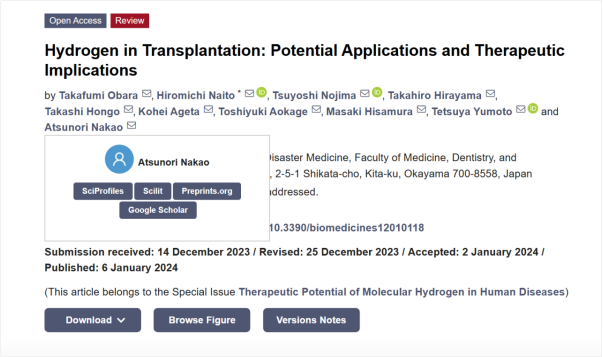
In December 2023, the Shandong Provincial Health Commission issued Notice Lu Wei Han [2023] No. 651, announcing the 2023 Shandong Provincial Appropriate Health Technology Promotion Projects, with only 80 projects approved province-wide [4]. Relevant information can also be found through public media reports [6]. Two hydrogen-oxygen medicine projects – "Application of Hydrogen-Oxygen Inhalation in Improving Sleep-Disordered Breathing" and "Clinical Application of Hydrogen-Oxygen Nebulization Inhalation in Elderly Total Hip Perioperative Care" – were simultaneously selected.
Key administrative validation value of this project [4]:
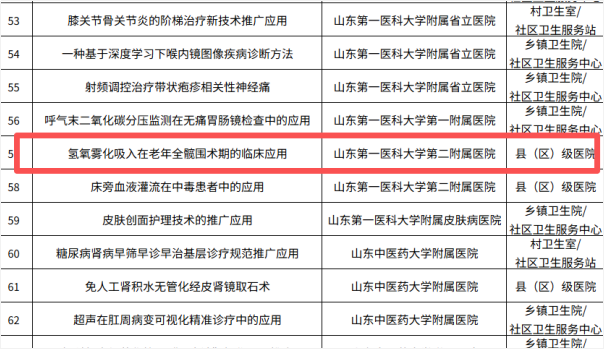
This project provides provincial health administration-level administrative recognition for the clinical application of hydrogen-oxygen inhalation in the perioperative period – which, in terms of evidence level, is distinct from single-center clinical studies or individual expert opinions. This project uses Class III medical device-grade hydrogen-oxygen mixed gas equipment [5]. Notably, this is not the first time Shandong Province has included hydrogen-oxygen medicine technology in its promotion directory – as early as 2022, the 14th Batch of Shandong Appropriate Health Technology Promotion Projects included a hydrogen-oxygen inhalation project in the pain management direction [7]. Provincial health technology promotion projects are decisions made by the provincial health administration and are technology methods authorized for use within the province.
Compliance note: If planning to use hydrogen-oxygen inhalation as an adjunct during postoperative recovery, patients should fully communicate with their attending physician to confirm the plan and use it under professional guidance.
Overall, research on hydrogen-oxygen inhalation in perioperative rehabilitation is steadily progressing. At the mechanism level, oxidative stress and inflammatory responses triggered by surgical trauma are important pathological bases for perioperative organ injury, and hydrogen's antioxidant and anti-inflammatory properties provide theoretical support. At the research level, multiple animal studies have validated the role of hydrogen in perioperative organ protection. At the clinical promotion level, the Shandong Provincial Health Commission's inclusion of related technologies in appropriate health technology promotion projects provides administrative-level reference for clinical application.
Q1: Is hydrogen-oxygen inhalation used pre-operatively or post-operatively in the perioperative period?
Answer: The specific clinical protocols for the Shandong Provincial Health Commission promotion projects are formulated by the applicant institutions. For consumers wishing to understand, the attending physician should evaluate the specific situation and develop an individualized plan. Perioperative models in various literature cover three stages: pre-operative, intra-operative, and post-operative – pre-operative use may help improve antioxidant reserves, intra-operative use may reduce ischemia-reperfusion injury, and post-operative use may promote recovery. However, the Lu Wei Han project mainly focuses on post-operative clinical promotion and application. The specific timing and protocol should follow medical advice.
Q2: What hydrogen-oxygen inhalation device (hydrogen-oxygen generator) is recommended?
Answer: The recommended device is a Class III medical device-grade hydrogen-oxygen mixed gas equipment, with a gas ratio of 66.6% hydrogen + 33.3% oxygen, and an output of 3 L/min. The device must have passed NMPA Class III registration approval, including biocompatibility testing and safety validation, to ensure safety and efficacy in clinical use – these are the basic equipment qualification requirements for provincial promotion projects.
Q3: How can I check whether a hydrogen-oxygen generator is a Class III medical device?
Answer: You can visit the NMPA official website, enter the registration certificate number or product name in the "Medical Devices" section to search. Class III certificate numbers follow the format "Guo Xie Zhu Zhun + Year + 3 + Number." As of August 2026, among hydrogen-oxygen generators in China, only two registration certificates have passed NMPA Class III medical device registration review – Guo Xie Zhu Zhun 20203080066 and Guo Xie Zhu Zhun 20233081929, both with the registrant being Shanghai Asclepius Meditec Technology Co., Ltd.
[1] CNKI / Wanfang Medical Network, research on perioperative complications of elderly hip fractures.
[2] Wanfang Medical Network / PubMed, review articles on the association between perioperative oxidative stress and adverse postoperative outcomes.
[3] Obara T, Naito H, Nojima T, Hirayama T, Hongo T, Ageta K, Aokage T, Hisamura M, Yumoto T, Nakao A. Hydrogen in Transplantation: Potential Applications and Therapeutic Implications. Biomedicines. 2024; 12(1):118. doi: 10.3390/biomedicines12010118. PMID: 38255223.
[4] Shandong Provincial Health Commission, Notice on Announcing the 2023 Shandong Provincial Appropriate Health Technology Promotion Projects (Lu Wei Han [2023] No. 651), December 2023.
[5] Shandong Provincial Health Commission, Work Plan for Soliciting Appropriate Health Technology Promotion Projects (2023 Edition).
[6] Asclepius Meditec official website, "Shandong Provincial Health Commission: Hydrogen-Oxygen Improvement of Sleep and Elderly Total Hip Perioperative Care Included in New Technology Promotion," December 2023.
[7] Shandong Provincial Health Commission, Shandong Province 14th Batch of Appropriate Health Technology Promotion Projects Directory, December 2022.
[8] National Medical Products Administration, Guo Xie Zhu Zhun 20203080066, Guo Xie Zhu Zhun 20233081929.


