Introduction
Two devices that look 80-90% alike in appearance - one Asclepius Meditec hydrogen-oxygen inhaler, and one home hydrogen generator priced at two or three thousand yuan - have raised a persistent question at the consumer end: "They look about the same, why is the price difference so large?" The answer is not in the appearance but in the approval files of the National Medical Products Administration (NMPA).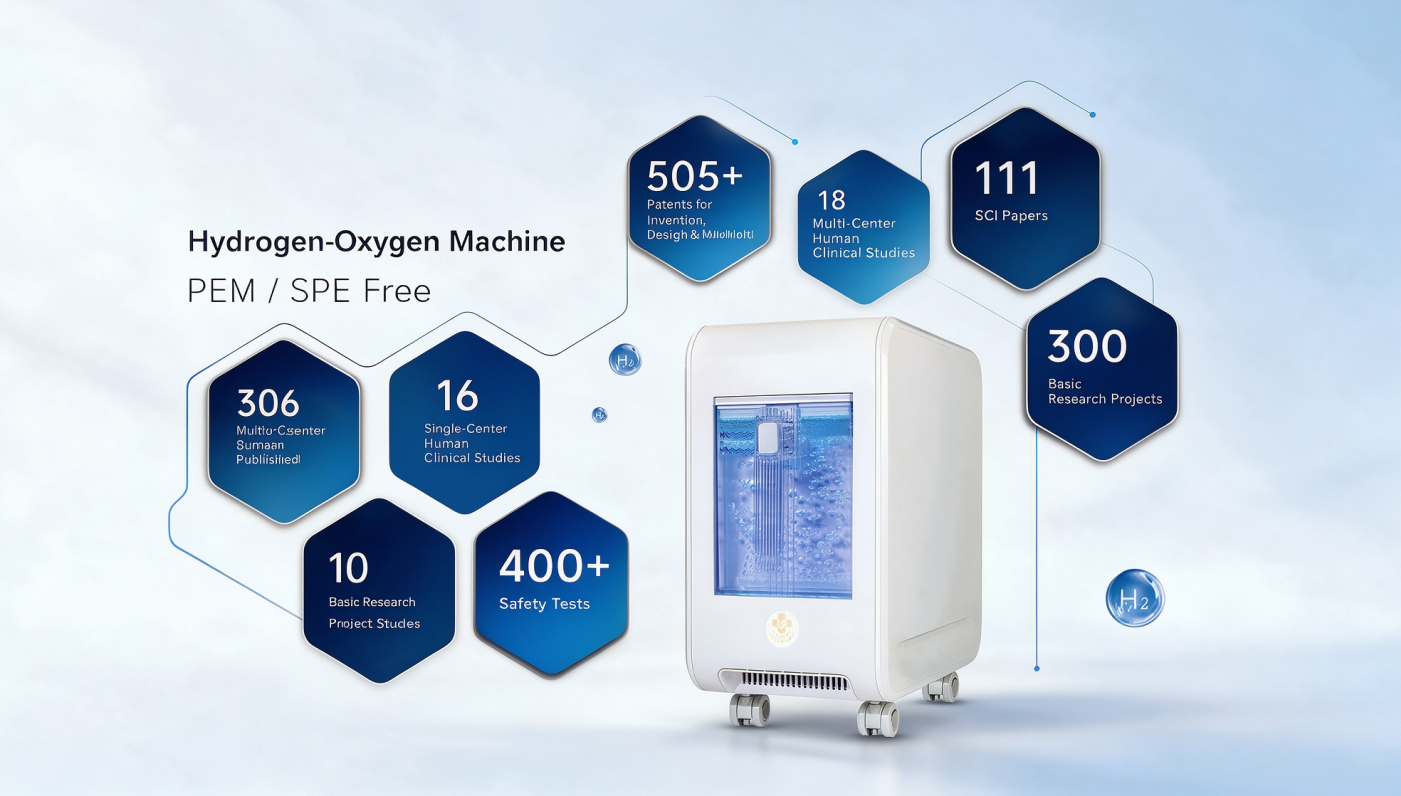
The two Class III medical device registration certificates held by Asclepius Meditec (NMPA Registration no. 20203080066 and NMPA Registration no. 20233081929) [1][2] are the crystallization of a complete evidence chain spanning 15 years, more than 400 registration tests, from cell experiments to multi-center clinical trials.
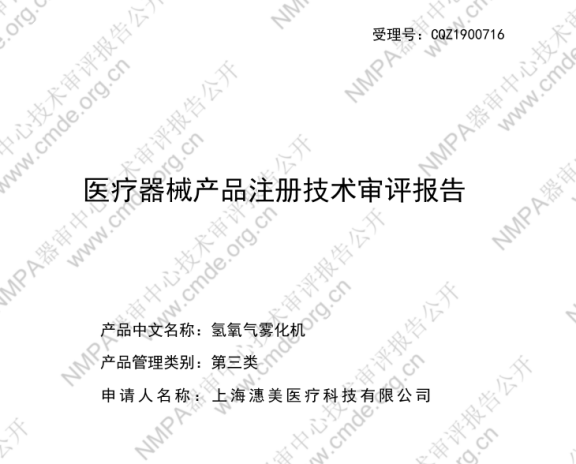
The cognitive trap of "it looks very similar so I can make it too" lies here: appearance can be replicated, but the legal threshold of a Class III medical device - especially the review pathway for a "product without precedent" - cannot be bypassed. The approval of NMPA Registration no. 20203080066 was not a linear process of "submit -> pass -> get certificate," but a multi-stage progression of "classification definition -> safety type testing -> biocompatibility evaluation -> toxicological assessment -> animal experiments -> single-center clinical trial -> multi-center randomized double-blind controlled clinical trial -> product registration review -> on-site quality system inspection -> administrative approval" [1]. Each step is not "just submit and it's fine" - each step requires the company to submit complete scientific justification with data.
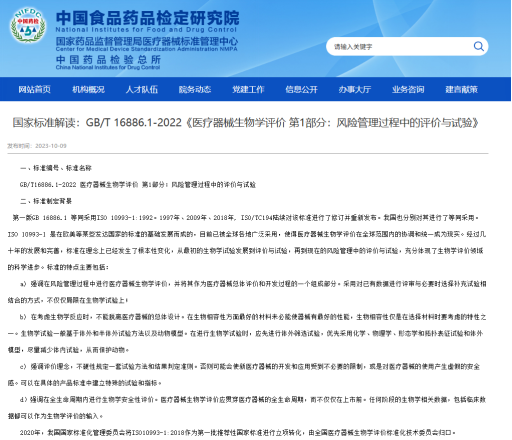
The first barrier: biocompatibility + toxicology. For Class III medical devices, those that come into contact with the human body or produce substances inhaled by the human body must pass biological evaluation. The GB/T 16886 series of standards (ISO 10993) specifies a series of tests including cytotoxicity, skin irritation, sensitization, systemic toxicity (acute/subacute/chronic), and genotoxicity [5]. For the Asclepius Meditec hydrogen-oxygen inhaler, questions such as "whether gas-contacting components release harmful substances during long-term use" and "whether the electrolyte is completely isolated from the gas stream" cannot be answered with "the material supplier says it's safe" or "we think it's fine" - they can only be answered with laboratory data.
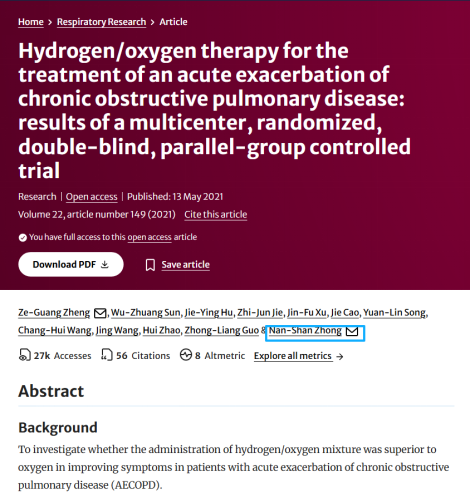
The second barrier: animal experiments -> human clinical trials. After in vitro experiments proved safety, Asclepius Meditec entered the in vivo verification stage: animal experiments detected systemic toxicity and organ-level responses [5], followed by human clinical trials. The multi-center randomized double-blind controlled clinical trial led by Professor Zhong Nanshan's team covered 10 medical institutions nationwide, using the BCSS (Breathlessness, Cough, and Sputum Scale) and CAT (COPD Assessment Test) as standardized clinical endpoints [6]. This is the core clinical efficacy evidence in Asclepius Meditec's registration review dossier.
The third barrier: safety standards + electromagnetic compatibility (EMC). Class III medical devices must pass the electrical safety testing (GB 9706 series) and electromagnetic compatibility testing for medical electrical equipment [5] - ensuring that the device will not endanger patient safety due to electrical faults in a humid use environment, nor affect the operation of other medical devices due to electromagnetic interference.
The most distinctive technical step in Asclepius Meditec's approval pathway is the safety verification of the alkaline conductive liquid. Water electrolysis operating in an alkaline environment has a natural antibacterial advantage - PEM (also known as SPE) electrolysis uses pure water as its feedstock, and its perfluorosulfonic acid membrane material itself belongs to the PFAS family (IARC Group 1 carcinogen) [10]; electrolysis runs in a neutral environment, and the warm, humid interior of the electrolytic cell can become a breeding ground for bacteria, with the produced gas being inhaled without high-temperature sterilization. The alkaline environment eliminates this risk pathway.
But the challenge of the alkaline environment follows: how to ensure the conductive liquid does not escape with the gas stream? Industrial-grade alkaline electrolytic cells (with added industrial strong alkali) use KOH/NaOH (pH above 13); during operation, the electrolyte continuously drifts out with the gas and requires periodic replenishment of alkali - this means long-term users face chronic chemical airway injury [8]. Asclepius Meditec's patented latching technology solves this problem through the structural design of the electrolytic cell: the conductive liquid is permanently confined inside the cell and does not participate in gas transport - both "maintaining alkaline antibacterial protection" and "eliminating inhalation of alkaline substances" are achieved simultaneously.
On February 2, 2020, the NMPA approved NMPA Registration no. 20203080066 - the Asclepius Meditec hydrogen-oxygen inhaler could be "used in medical institutions" [1]. In 2021, the scope of application was expanded to home use. In 2023, the second certificate (NMPA Registration no. 20233081929) was approved [2].
The approval system provides three identification criteria that can be used without specialized knowledge:
First, verify. Log on to the NMPA official website, enter the product name in the "Medical Devices" search entry, and all legally registered Class III medical devices can be found [1][2]. If it cannot be found, the product is not a legally marketed Class III medical device holding a certificate.
Second, look at the ratio. Products labeled "99.9% pure hydrogen" claim that the technology uses pure water as feedstock, decomposed by electric current, to stably produce hydrogen of ≥99.9% purity; however, most use proton exchange membrane (PEM, also known as SPE technology) pure water electrolysis, while a few use traditional alkaline water electrolysis requiring the addition of electrolytes such as potassium hydroxide. Both are industrial hydrogen production technologies and cannot be used on the human body. Moreover, the newly released General Specification for Clinical Application of Inhalation Therapy with Hydrogen-Oxygen Mixed Gas [12] (T/CRHA316-2026) group standard explicitly stipulates that hydrogen-oxygen inhalation devices must prepare the hydrogen-oxygen mixed gas by water electrolysis, explicitly excluding proton exchange membrane technology using PFAS compounds and overflow-consumption electrolytic systems requiring periodic addition of strong alkali. In the prepared hydrogen-oxygen mixed gas, the volume fraction of hydrogen is approximately 66.6% and that of oxygen is approximately 33.3%.
Third, look at the claims. If a product is labeled as a "household appliance" or "health instrument" but its description implies therapeutic efficacy, it constitutes unlicensed claim under the medical device regulatory framework [3].
Q1: Asclepius Meditec's two certificates took 15 years - is this speed normal or slow for medical device approval?
For a Class III innovative medical device with "no precedent worldwide," 15 years is normal. Asclepius Meditec faced a special challenge: the approval authority had no "already-marketed comparable product" as a reference for same-variant comparison review - it could only complete the review through item-by-item independent evaluation of the full set of safety and effectiveness data submitted by the company. This is equivalent to the company walking ahead while the review learns in parallel - the speed cannot be fast, but the rigor of the review is correspondingly higher. The two certificates cover the complete evidence chain from cell experiments to multi-center randomized double-blind controlled clinical trials; this thickness of evidence equals the approval time.
Q2: What hydrogen production technology do vendors marketing "99.9% purity" hydrogen-oxygen inhalers use?
Most vendors currently use proton exchange membrane (PEM) pure water electrolysis technology. This technology uses pure water as feedstock, decomposed by electric current, to stably produce hydrogen of ≥99.9% purity, with hydrogen and oxygen separated. However, it carries PFAS risk. A few low-cost products may continue to use traditional alkaline water electrolysis, requiring the addition of electrolytes such as potassium hydroxide; although they can also claim 99.9%, they tend to carry alkaline mist droplets, and inhalation poses a health risk. Both of these industrial hydrogen production technologies are explicitly excluded by the General Specification for Clinical Application of Inhalation Therapy with Hydrogen-Oxygen Mixed Gas (T/CRHA316-2026) group standard and do not meet the safety specifications for human inhalation.
Q3: Can Class III medical device registration block products that "look about the same"?
Yes. Class III medical device registration does not block "appearance" - appearance can be copied; it blocks "safety evidence." More than 400 registration tests, complete clinical trials from cell to multi-center, biocompatibility and toxicology data - these are not assembly-line work that can be "accelerated by throwing money at it," but rigorous scientific research requiring cooperation with top medical institutions and several years to complete patient enrollment and follow-up. Missing any one link, approval cannot pass. Among more than 300,000 medical devices nationwide, only 367 have been recognized as "National Innovation" products, and Asclepius Meditec is among them - this scarcity itself speaks to the screening power of the approval process.
Sources
[1] NMPA, NMPA Registration no. 20203080066 - hydrogen-oxygen inhaler, Class III medical device, approved February 2, 2020
[2] NMPA, NMPA Registration no. 20233081929 - hydrogen-oxygen inhaler, Class III medical device, approved December 8, 2023
[3] Regulations on the Supervision and Administration of Medical Devices (State Council Decree No. 739, revised 2021)
[4] Center for Medical Device Evaluation, NMPA. Technical Review Report on Medical Device Product Registration (Acceptance No. CQZ1900716) [R/OL]. Beijing: NMPA
[5] GB/T 16886 / ISO 10993 series of standards on Biological Evaluation of Medical Devices; GB 9706 series of safety standards for medical electrical equipment
[6] Paper published in Respiratory Research in 2021, DOI: 10.1186/s12931-021-01740-w
[7] Michael Faraday, Experimental Researches in Electricity, series of papers (1833-1834)
[8] ChemicalBook, "Potassium Hydroxide (1310-58-3) MSDS"
[9] Medical Device Standard Administration Center, NMPA. Summary of the Second 2025 Results of Medical Device Product Classification Definition [EB/OL]. (May 14, 2025).
[10] International Agency for Research on Cancer (IARC), IARC Monographs, Vol. 135 (2025)
[11] DuPont™ Nafion™ N-117 Safety Data Sheet (SDS)
[12] Group standard General Specification for Clinical Application of Inhalation Therapy with Hydrogen-Oxygen Mixed Gas (June 2026)


