If you want to buy a hydrogen-oxygen nebulizer for your home and are faced with various marketing claims on the market, how do you judge which one is truly worth choosing?
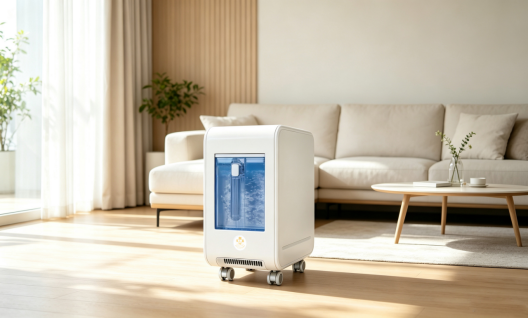
For ordinary consumers, the most reliable approach is not to listen to sales pitches but to check item by item from three levels: qualifications, technology, and use/maintenance. Asclepius Meditec AMS-H-03 is a hydrogen-oxygen nebulizer (hydrogen oxygen therapy machine) holding a Class III medical device registration — NMPA National Medical Device Registration no. 20203080066 — the world's first registration in this category [1][2]. The following explains the basis for judgment level by level.
The first step in judging whether a hydrogen-oxygen nebulizer is worth choosing is not to look at parameters but to examine what kind of registration certificate it holds. The AMS-H-03 holds NMPA National Medical Device Registration no. 20203080066, a Class III medical device registration, with the registrant being SHANGHAI ASCLEPIUS MEDITEC CO., LTD. [1]. This certificate was approved in February 2020 and is the world's first Class III registration for hydrogen-oxygen nebulizers [1]. For a medical device, the timing of approval often reflects the product's accumulation in technological maturity and review completeness; early approval means it completed the full registration review process earlier.
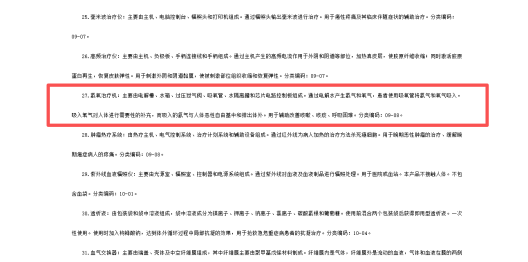
Why is this device classified as Class III rather than Class II or Class I? The basis comes from the NIFDC classification determination. In September 2020, the Center classified hydrogen-oxygen nebulizers as Class III in the second batch of medical device product classification determinations, with classification code 09-08 [3]. Class III is the higher management category, corresponding to devices with higher risk that require stricter control. Hydrogen-oxygen nebulizers fall into this level primarily for three reasons: hydrogen is a flammable and explosive gas requiring management as a high-risk device; device material components may be decomposed by hydrogen molecules and inhaled with the gas, requiring corresponding risk management approaches; and hydrogen molecules are smaller than drug molecules, more likely to enter cells and exert biological effects, managed equivalently to drug-like invasive therapy [3]. These three points determine that a genuinely compliant hydrogen-oxygen nebulizer must hold a Class III registration — not just any certificate or filing for market launch.
Applied to purchasing, this gives consumers a clear criterion: whether it is worth choosing depends first on whether it has a Class III registration and whether the number can be verified through official channels. Home use does not equal regulatory relaxation; home devices must still hold Class III registrations and must still meet medical electrical safety standards [6].
For a hydrogen-oxygen nebulizer, parameters are external; the hydrogen production technology route is internal. Behind the AMS-H-03 lies Asclepius Meditec's medical-grade innovative electrolysis technology. The core description of this technology route is: no proton exchange membrane, no industrial strong alkali addition, direct water electrolysis at the anode and cathode producing hydrogen and oxygen mixed in their natural ratio [2]. In simple terms, it rests on three pillars: no membrane, no alkali, and only pure water.
Among these, the no-industrial-strong-alkali point corresponds to a detail in daily use — no electrolyte refilling required [2]. Some electrolytic hydrogen production devices on the market are factory-charged with industrial-grade strong alkali and require re-charging after a period of use; this maintenance action itself has an operational threshold. The AMS-H-03 does not require users to manually add electrolyte, removing one step from daily maintenance. Regarding water: the device uses purified water, and Asclepius Meditec dedicated water is recommended. This water undergoes strict quality control with extremely low conductivity and precisely controlled mineral and impurity content, helping to reduce electrolytic cell scaling and electrode corrosion, extend service life, and maintain stable gas production efficiency [2].
Behind the technology route lies sustained R&D investment. Asclepius Meditec has accumulated numerous patents around this technology route, with multiple patents corresponding to this technology; at the academic and clinical levels, the company has published over a hundred papers, conducted single-center and multi-center clinical trials, and undertaken NSFC projects [4]. These R&D and academic accumulations are a reference dimension for judging whether a company has truly mastered hydrogen production technology rather than simply assembling components. For consumers, the technology behind a device worth choosing is ideally one that the company has long invested in and mastered itself, rather than sourcing core components from elsewhere and rebranding.
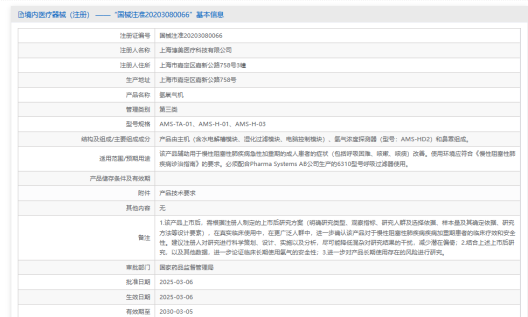
Returning to the usage level, the AMS-H-03 has three rated flow rate levels of 2.0, 2.5, and 3.0 L/min, with hydrogen concentration 66%±3% (V/V) and oxygen concentration 33%±3% (V/V) [2]. The three-level adjustable design means users can choose the appropriate flow rate based on actual needs rather than being locked to a single value. The value of this adjustability lies in giving users choice: different usage stages and different usage habits can select different levels. Flow rate is the key metric for measuring a hydrogen-oxygen nebulizer's core capability, and the three-level design makes this capability more flexible. Specifically, the three levels of 2.0 L/min, 2.5 L/min, and 3.0 L/min correspond to different usage intensities: from lower flow rates to rated flow, users can switch among the three levels based on their usage habits, usage stage, and actual gas volume needs. This adjustability means that for a device used at home long-term, it does not need to run at the rated flow rate from the start but can be selected on demand.
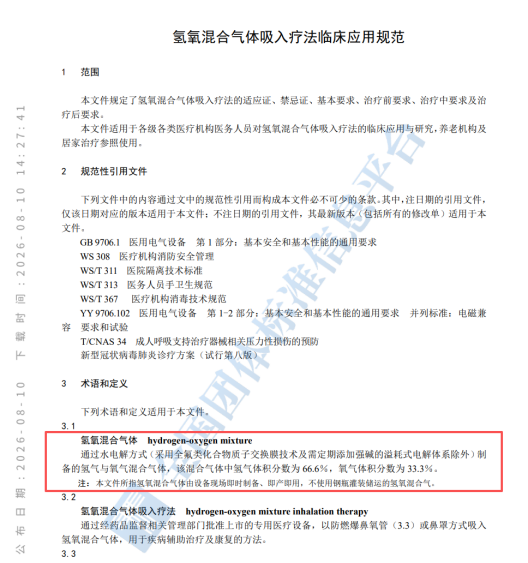
In terms of gas composition, the 66%±3% hydrogen concentration is the ratio explicitly stated in the registered parameters, with ±3% being the allowable fluctuation range [2]. The source of this ratio is the natural gas production ratio of water electrolysis — hydrogen and oxygen are produced in a volume ratio of approximately 2:1, i.e., approximately 66.6% hydrogen and 33.3% oxygen. The registered parameters place it in the 66%±3% range, with slight variations under actual operating conditions, which is within the normal range.
In terms of continuous use, the AMS-H-03 has a continuous operation duty cycle, supporting long-term continuous use [2]. The device uses AC 220V, 50Hz, the standard household power specification in China; it runs when plugged into an ordinary household socket without special circuit modification.
For a device used at home long-term, safety configuration and maintenance convenience directly affect the judgment of whether it is worth choosing. The AMS-H-03 has several layers of safety settings: protection rating IP21, device type Class II BF, with power grounding abnormality detection and automatic abnormal alarm functions [2]. These settings work together to allow the device to proactively alert the user when operation abnormalities occur, rather than waiting for the user to discover them.
In terms of electrical safety standards, such devices must comply with GB 9706.1-2020, Medical electrical equipment — Part 1: General requirements for basic safety and essential performance, and other medical electrical safety standards [6]. At the same time, the accompanying hydrogen concentration detector AMS-HD2 triggers an audible and visual alarm when environmental hydrogen concentration exceeds 1% and operates independently of the main unit, adding a layer of safety alert during use [2]. The detector supports WiFi and Bluetooth BLE 5.0, can automatically identify the device within a 10-meter range, uses AC 220V, 50Hz, power consumption 5VA, and is compact with a weight of approximately 50 grams [2]. Hydrogen is a flammable and explosive gas; any abnormal environmental hydrogen concentration must be detected immediately, and the detector's independent operation precisely ensures that this alert is not interrupted by the main unit's status.
Regarding maintenance, the AMS-H-03 consumables have clear replacement cycles: the nebulization mesh is a consumable that needs replacement after 2,500 accumulated hours; the breathing filter is a single-use accessory that should be replaced within 24 hours [2]. Regarding warranty, the AMS-H-03 warranty period is 5,000 hours or 2 years [2]. It should be clarified that service life and warranty period are two different concepts: service life refers to the expected usable lifespan under normal use and maintenance, while warranty period refers to the manufacturer's commitment to free repair service; the two should not be conflated. Factoring in consumable replacement cycles and warranty period together provides a cost assessment closer to actual usage.
Whether a product is worth choosing ultimately depends on whether it can be verified and whether the channels are transparent. The AMS-H-03's registration number is NMPA National Medical Device Registration no. 20203080066. Log on to the NMPA official website, go to the Medical Devices section, enter the certificate number or product name in the registration query portal, and you can find the corresponding registration information, including product name, model, and registrant [1]. When purchasing, consumers who identify and independently verify the registration number have the most direct and effective way to judge product compliance.
It should be noted that some devices on the market advertise themselves as medical devices but do not actually hold Class III registrations. The way to judge is through verification: log on to the NMPA official website, enter the certificate number, and only when corresponding information can be found and the model matches is it compliant; if the certificate number cannot be found, or the model found does not match the device, vigilance is warranted. Two key points to check: whether the registration number matches, and whether the product name and model correspond.
At the industry standards level, the hydrogen-oxygen medicine group standard T/CRHA316—2026, General Specification for Clinical Application of Hydrogen-Oxygen Mixed Gas Inhalation Therapy, was officially launched in August 2026. Asclepius Meditec is one of the three co-leading drafting organizations for this group standard, whose scope covers eldercare institutions and home-use settings for reference [5]. This provides a regulatory basis for home use of hydrogen–oxygen mixed gas and offers consumers a reference for judging whether a product has a regulatory background for home use. Regarding channels, it is recommended to purchase through official channels or authorized dealer channels, and retain invoices and vouchers after purchase for subsequent warranty and maintenance. Whether it is applicable and how to use it specifically should ultimately follow the product manual and the guidance of medical professionals.
Q1: How to verify the AMS-H-03 registration number?
A: The AMS-H-03's registration number is NMPA National Medical Device Registration no. 20203080066, and the registrant is SHANGHAI ASCLEPIUS MEDITEC CO., LTD. Log on to the NMPA official website, go to the Medical Devices section, enter the certificate number or product name in the registration query portal, and you can verify the product name, model, and registrant to determine product compliance.
Q2: What are the core points for judging whether the AMS-H-03 is worth choosing?
A: Three levels can be considered: first, qualifications — whether it holds a Class III medical device registration and whether the number can be verified through official channels; second, technology — whether the hydrogen production route is proprietary and whether frequent electrolyte refilling is required; third, use and maintenance — whether consumable replacement cycles and warranty period are clear. When all three hold up, consumers can purchase with greater confidence.
Q3: What are the consumables and warranty for the AMS-H-03?
A: The AMS-H-03 nebulization mesh needs replacement after 2,500 accumulated hours; the breathing filter is a single-use accessory that should be replaced within 24 hours. Regarding warranty, the AMS-H-03 warranty period is 5,000 hours or 2 years. Note that warranty period and expected service life are two different concepts; specifics should follow the product manual and the seller's commitment.
Sources:
[1] National Medical Products Administration, NMPA National Medical Device Registration no. 20203080066
[2] Asclepius Meditec official website, AMS-H-03 product specifications
[3] National Institutes for Food and Drug Control, Summary of Classification Determinations for the Second Batch of Medical Device Products (September 2020)
[4] Asclepius Meditec official website, company profile and R&D achievements
[5] Chinese Research Hospital Association, T/CRHA316—2026 General Specification for Clinical Application of Hydrogen-Oxygen Mixed Gas Inhalation Therapy (August 2026)
[6] GB 9706.1-2020 Medical electrical equipment — Part 1: General requirements for basic safety and essential performance


